
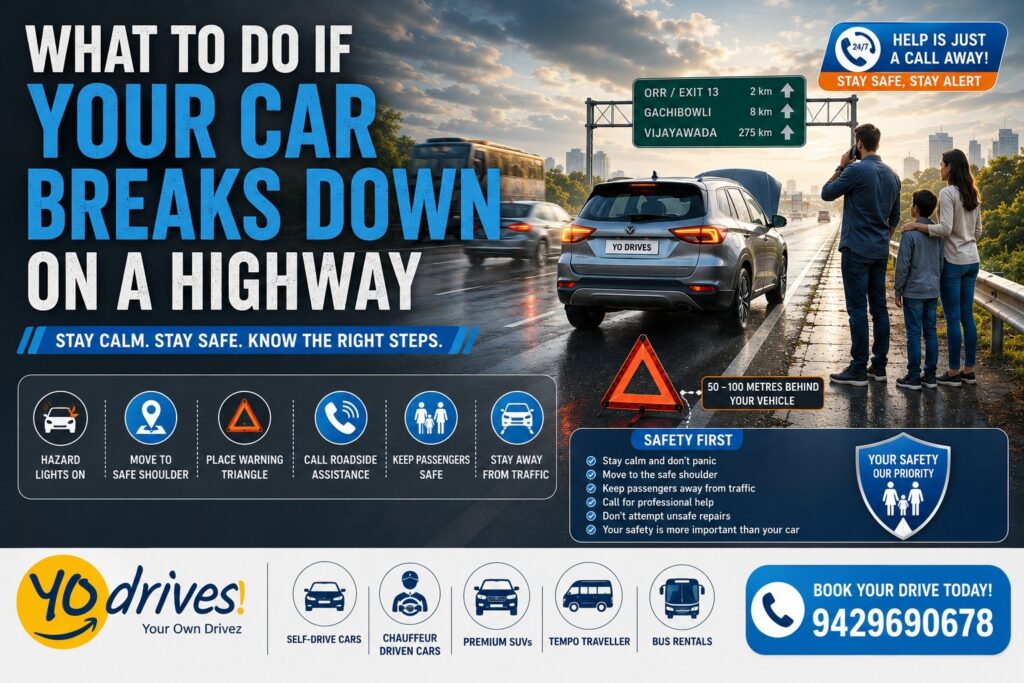
What to do if your car breaks down on a highway? Learn the 7 essential safety steps, emergency roadside assistance tips, common causes, and how YoDrives helps you travel safely.
A highway road trip can quickly turn stressful if your car suddenly loses power, develops a flat tyre, or overheats. Unlike city roads, highways have fast-moving traffic, making a vehicle breakdown far more dangerous. Knowing what to do if your car breaks down on a highway can help you protect yourself, your passengers, and other motorists while getting back on the road safely.
Whether you’re driving your own vehicle or renting a self-drive car, this guide covers everything you need to know—from immediate safety measures and emergency essentials to common causes of breakdowns and prevention tips.
Quick Answer: What Should You Do If Your Car Breaks Down on a Highway?
If your car breaks down on a highway:
- Stay calm and avoid sudden braking.
- Turn on your hazard lights immediately.
- Move your vehicle to the shoulder or a safe location if possible.
- Exit carefully from the side away from traffic.
- Place a reflective warning triangle behind the vehicle.
- Call roadside assistance and share your exact location.
- Avoid attempting repairs unless you’re in a completely safe area.
These simple steps can significantly reduce the risk of accidents and help emergency services locate you quickly.
Why Highway Breakdowns Are More Dangerous
A vehicle breakdown on a highway is very different from one on a city street. Vehicles often travel at speeds of 80–120 km/h, giving drivers very little time to react to a stopped vehicle.
Additional risks include:
- High-speed traffic
- Limited emergency stopping areas
- Heavy trucks and buses
- Poor visibility during rain, fog, or night driving
- Driver panic leading to unsafe decisions
That’s why knowing exactly what to do before an emergency occurs is essential.
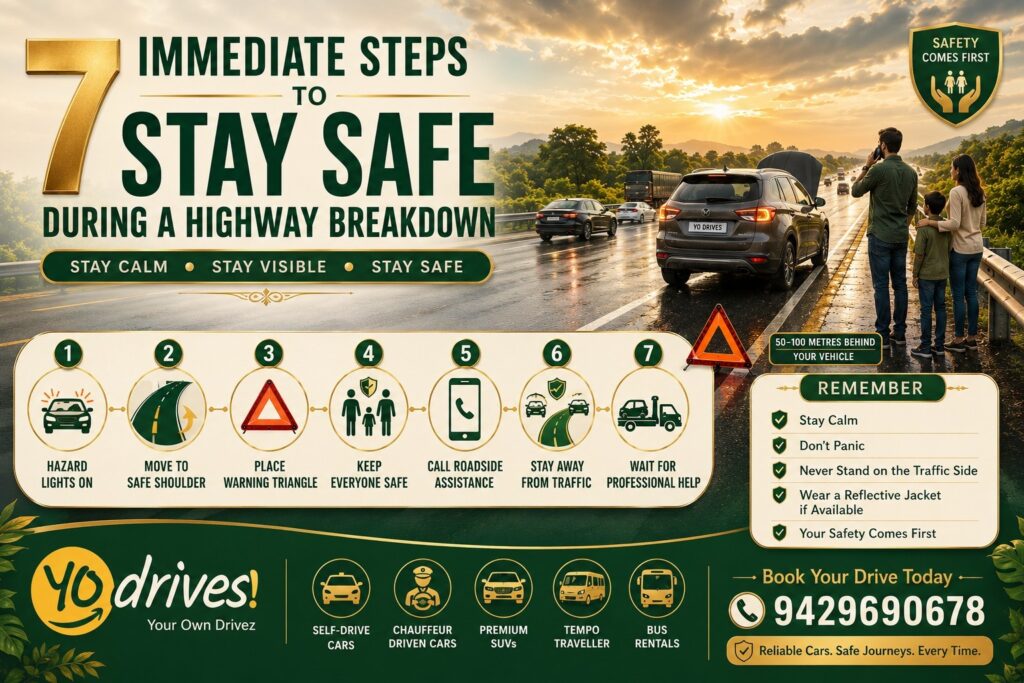
Step 1: Stay Calm and Keep Control
The first few seconds after a breakdown are the most important.
If your vehicle begins losing power:
- Keep both hands firmly on the steering wheel.
- Don’t slam on the brakes.
- Turn on your hazard warning lights immediately.
- Reduce speed gradually.
- Signal your movements so other drivers know your intentions.
Remaining calm helps you make safer decisions and reduces the chance of causing another accident.
Step 2: Move to a Safe Location
If the vehicle is still moving, carefully steer towards the safest available location, such as:
- Highway shoulder
- Emergency parking bay
- Petrol station
- Toll plaza
- Highway rest stop
Never stop in the middle of a traffic lane unless your vehicle is completely disabled.
If the car cannot move any farther, pull over as far away from moving traffic as possible.
Step 3: Turn On Your Hazard Lights
Your hazard lights immediately alert other drivers that your vehicle is disabled.
Keep them switched on until assistance arrives.
If you’re driving at night or in poor weather conditions, switch on your parking lights as well to improve visibility.
Step 4: Move Everyone to Safety
Your vehicle can be replaced people cannot.
If it’s safe to exit:
- Leave the vehicle from the side away from traffic.
- Help children, elderly passengers, and pets first.
- Move everyone behind a guardrail or as far from traffic as possible.
- Never stand directly in front of or behind the vehicle.
Your safety should always be your highest priority.
Step 5: Place a Reflective Warning Triangle
A reflective warning triangle gives approaching drivers enough distance to slow down or change lanes safely.
Recommended placement:
- 50–100 metres behind your vehicle on regular highways.
- 100–150 metres on expressways where traffic speeds are higher.
If available, use reflective cones or LED emergency lights for even better visibility.
Step 6: Call Roadside Assistance
Once everyone is safe, contact:
- Your roadside assistance provider
- Vehicle manufacturer support
- Highway emergency services
- Your insurance company (if required)
Be ready to share:
- Your live location
- Highway number
- Exit number or nearest landmark
- Vehicle make and model
- Description of the issue
Sharing your smartphone’s live location can help emergency services find you much faster.
If you’re travelling on National Highways in India, it’s also a good idea to stay informed about official highway services, safety initiatives, and emergency information provided by the National Highways Authority of India (NHAI). Checking official updates before a long journey can help you stay prepared for road conditions and travel advisories.
Step 7: Don’t Attempt Dangerous Repairs
Many accidents happen because drivers try fixing their vehicles too close to moving traffic.
Avoid repairing:
- Flat tyres on busy highways
- Engine overheating
- Battery failures
- Electrical problems
- Cooling system issues
If the repair requires standing near traffic, wait for professional assistance instead.
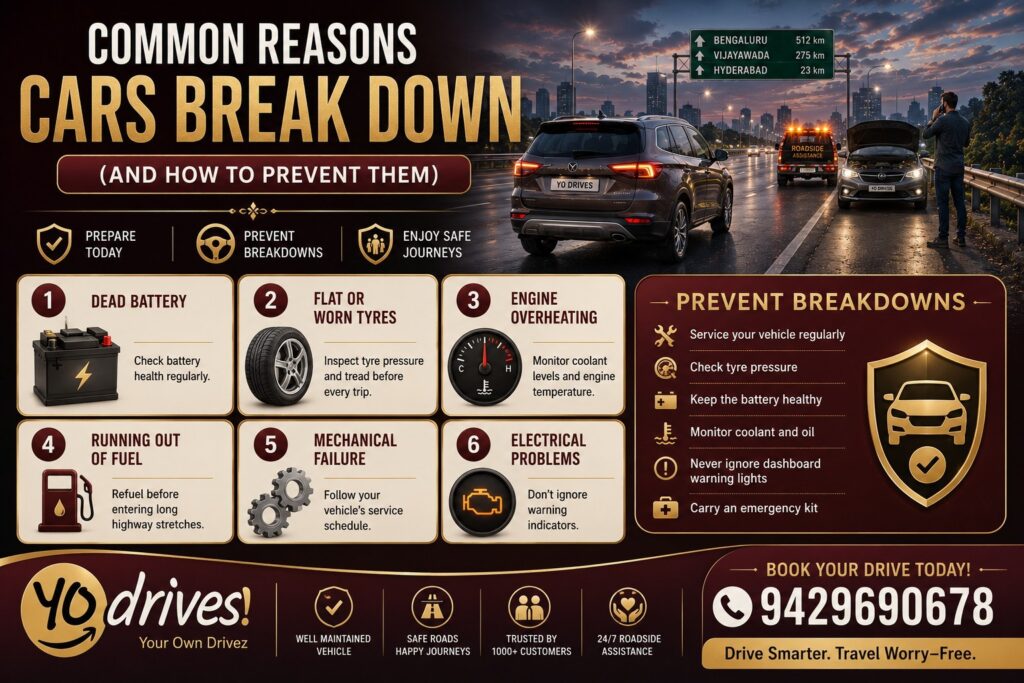
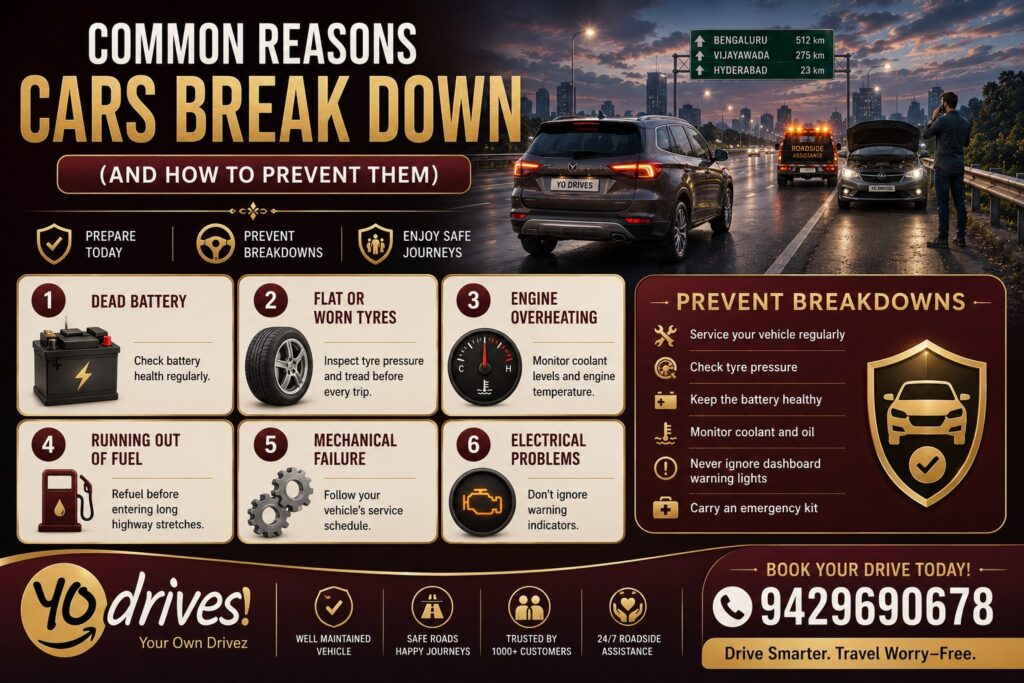
Common Reasons Cars Break Down on Highways
Understanding the most common causes of breakdowns can help you prevent them.
1. Flat Tyres and Blowouts
Common causes include:
- Incorrect tyre pressure
- Worn-out tyres
- Overloading the vehicle
- Driving over sharp objects
- High road temperatures
2. Dead Battery
Battery problems are often caused by:
- Old batteries
- Faulty alternators
- Lights left on
- Loose battery terminals
3. Engine Overheating
Overheating usually occurs because of:
- Low coolant
- Radiator leaks
- Cooling fan failure
- Long drives in extreme heat
4. Running Out of Fuel
One of the easiest breakdowns to avoid.
Never rely entirely on your fuel gauge refuel before entering long highway stretches where petrol stations may be far apart.
5. Mechanical Failure
Parts that commonly fail include:
- Alternator
- Starter motor
- Drive belts
- Transmission
- Suspension components
Routine servicing significantly reduces the risk of unexpected failures.
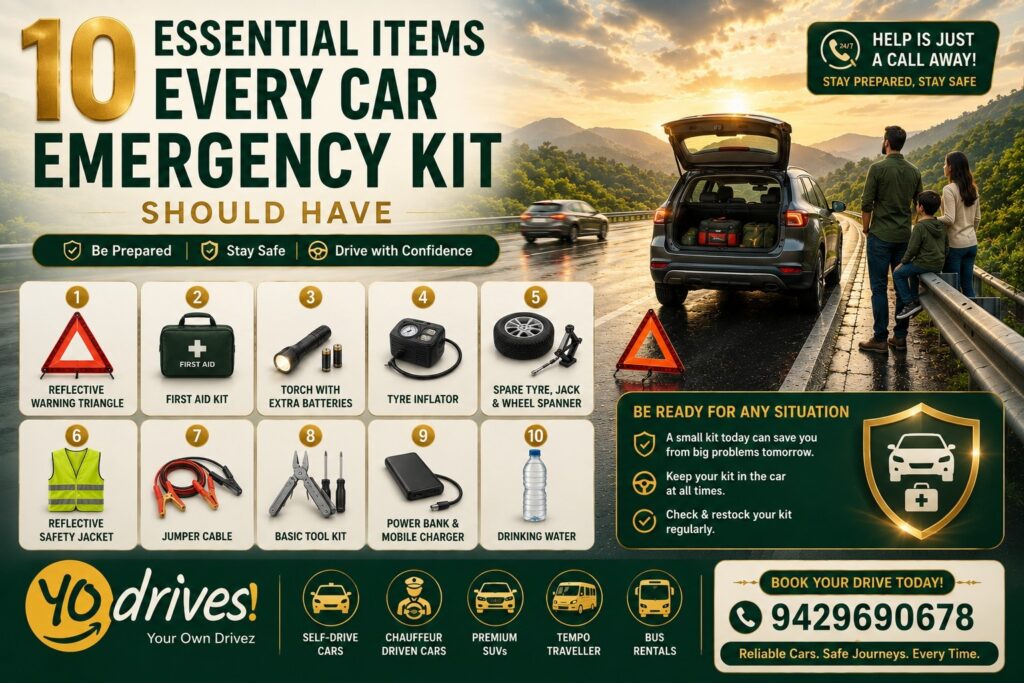
Emergency Kit Checklist Every Driver Should Carry
A well-prepared driver is a safer driver.
Keep these essentials in your vehicle:
- Reflective warning triangle
- Reflective safety jacket
- First-aid kit
- Torch with spare batteries
- Spare tyre
- Jack and wheel spanner
- Portable tyre inflator
- Mobile phone charger
- Power bank
- Drinking water
- Emergency contact list
- Basic toolkit
- Jumper cables
- Multi-purpose knife
- Blanket for emergencies
These items can make a stressful situation much easier to manage while waiting for help.
Mistakes to Avoid During a Highway Breakdown
Avoid these common but dangerous mistakes:
❌ Stopping in the middle of traffic
❌ Standing on the traffic-facing side of the vehicle
❌ Forgetting to turn on hazard lights
❌ Walking across busy highway lanes
❌ Ignoring dashboard warning lights
❌ Driving with worn-out tyres
❌ Starting a long trip with very little fuel
❌ Attempting repairs in unsafe conditions
How to Prevent a Highway Breakdown
Most highway breakdowns can be prevented with a simple pre-trip inspection.
Before every long drive, check:
- Tyre pressure
- Tyre tread depth
- Engine oil level
- Coolant level
- Brake performance
- Battery condition
- Lights and indicators
- Windshield wipers
- Fuel level
Safe driving isn’t just about maintaining your vehicle it’s also about following recommended road safety practices. The Ministry of Road Transport & Highways (MoRTH) regularly publishes road safety initiatives, traffic regulations, and awareness campaigns to help motorists travel more safely. Reviewing these guidelines can help you become a more confident and responsible driver.
Why Renting a Well Maintained Car Makes Sense
Planning a family vacation, business trip, or weekend getaway?
Renting a professionally maintained vehicle can greatly reduce the chances of unexpected mechanical issues.
At YoDrives, every vehicle undergoes regular servicing and safety inspections to help ensure a smooth and reliable journey.
When you rent with YoDrives, you benefit from:
- Regularly serviced vehicles
- Well-maintained tyres and batteries
- Reliable braking systems
- Air-conditioned comfort
- 24/7 roadside assistance (where applicable)
- Self-drive cars for flexible travel
- Chauffeur-driven cars for hassle-free journeys
- SUVs for family trips
- Luxury cars for premium travel
- Tempo Travellers for group outings
- Corporate travel solutions
Instead of worrying about vehicle reliability, you can focus on enjoying the road ahead.
Frequently Asked Questions
1. What should I do first if my car breaks down on a highway?
Turn on your hazard lights immediately, slow down gradually, and move your vehicle to the shoulder or another safe location if possible. Your first priority is keeping yourself and your passengers safe.
2. Is it safer to stay inside the car?
If your vehicle is stopped in a dangerous location with fast-moving traffic, carefully exit from the side away from traffic and move behind a guardrail. If you’re parked safely away from traffic, remaining inside with your seatbelt fastened may be safer until help arrives.
3. Should I change a flat tyre on a busy highway?
Only if you’re in a safe area with enough space. Otherwise, contact roadside assistance instead of risking your safety.
4. What emergency items should every car carry?
Every vehicle should have a reflective warning triangle, first-aid kit, torch, spare tyre, tyre inflator, power bank, drinking water, and emergency contact details.
5. Why choose YoDrives for highway travel?
YoDrives vehicles are regularly serviced and inspected for safety, helping reduce the chances of unexpected breakdowns. Whether you need a self-drive car, chauffeur-driven vehicle, SUV, or Tempo Traveller, you can travel with greater confidence.
Final Thoughts
A highway breakdown can happen unexpectedly, but knowing what to do if your car breaks down on a highway can make all the difference.
Remember these seven essential steps:
- Stay calm.
- Move to a safe location.
- Turn on your hazard lights.
- Keep passengers away from traffic.
- Place a warning triangle.
- Call professional roadside assistance.
- Never take unnecessary risks.
Preparation is the key to safer travel. Whether you’re driving your own car or renting one, regular maintenance and smart planning can help prevent unexpected breakdowns and ensure a safer journey.
Ready for a Safe & Hassle Free Road Trip?
Choose YoDrives for reliable, well-maintained self-drive and chauffeur-driven vehicles designed to make every journey safe, comfortable, and worry-free.
🌐 Website: https://www.yodrives.com
📞 Support: +91 9429690678
Book your next ride with YoDrives today and experience the confidence of travelling in a professionally maintained vehicle. Safe journeys start with the right car!
