
Monsoon Car Checklist: Check tyres, brakes, wipers, battery, fluids, and documents before a long drive. Stay safe during monsoon travel.
Introduction
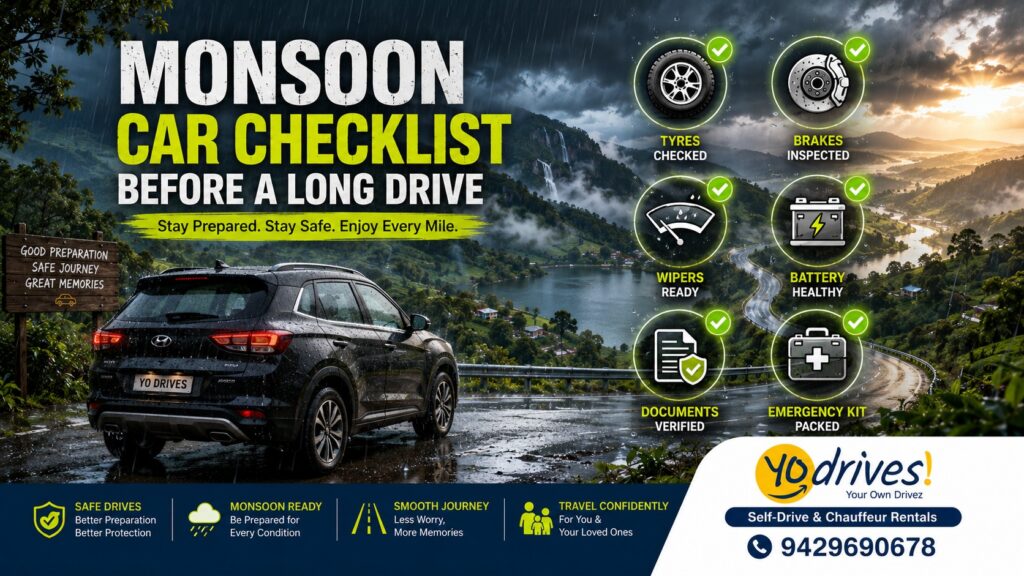
Planning a road trip during the rainy season? Following a proper Monsoon Car Checklist is essential for a safe and hassle-free journey. Monsoon is one of the most beautiful seasons for road trips in India, with lush green landscapes, cool weather, mist-covered hills, and refreshing rain showers creating unforgettable travel experiences. Whether you’re heading out for a weekend getaway, a family vacation, or a long-distance drive, completing a Monsoon Car Checklist before departure can help prepare your vehicle for wet roads, reduced visibility, and unpredictable weather conditions.
However, monsoon driving also comes with its own set of challenges. Wet roads, reduced visibility, waterlogging, slippery surfaces, and unexpected breakdowns can quickly turn an enjoyable trip into a stressful situation if your vehicle isn’t properly prepared.
Before starting your journey, check the latest weather forecast from the India Meteorological Department (IMD) and review traffic conditions using Google Maps to avoid flooded routes and delays.
Why a Monsoon Car Checklist Is Important
A proper Monsoon Car Checklist helps prepare your vehicle for the additional challenges and stress caused by rainy season driving, including:
- Waterlogged roads
- Slippery surfaces
- Mud and debris
- Reduced visibility
- Increased braking distances
Regular maintenance becomes even more critical during monsoon travel.
A well-prepared vehicle can:
- Improve safety
- Prevent unexpected breakdowns
- Enhance driving comfort
- Increase fuel efficiency
- Protect passengers during long journeys
Save Important Emergency Numbers Before Your Trip
Along with completing your Monsoon Car Checklist, it’s a good idea to save important emergency contact numbers before starting your journey. In case of a breakdown, accident, medical emergency, or severe weather conditions, quick access to the right support can make a significant difference.
Useful Emergency Numbers in India:
📞 Emergency Response Support System (ERSS): 112
🚑 Ambulance Services: 108
👮 Police Assistance: 100
🚒 Fire Services: 101
🚦 National Highway Helpline: 1033
📱 YoDrives Customer Support: +91 9429690678
Keeping these numbers handy can provide peace of mind and help you respond quickly during unexpected situations on the road.
1. Inspect Your Tyres Thoroughly
Tyres are your vehicle’s only contact with the road, making them one of the most important components to inspect before a monsoon trip.
Check Tread Depth
Proper tread depth helps:
- Improve road grip
- Reduce skidding
- Prevent hydroplaning
If the tyre tread appears worn out, consider replacing the tyres before the journey.
Check Tyre Pressure
Incorrect tyre pressure can affect:
- Vehicle handling
- Fuel efficiency
- Braking performance
Always maintain the manufacturer-recommended pressure levels.
Don’t Forget the Spare Wheel
Ensure:
- Spare tyre is in good condition
- Properly inflated
- Tools are available for emergency replacement
2. Test Your Brakes
Brakes are especially important during monsoon driving.
Check For:
- Unusual noises
- Delayed response
- Vibrations while braking
- Brake fluid levels
Wet roads increase stopping distance, making reliable brakes essential for safety.
3. Inspect Windshield Wipers
Visibility is often severely affected during heavy rains.
Check Wiper Blades For:
- Cracks
- Wear and tear
- Streaking marks
Replace worn-out blades before your trip.
Keep Windshield Washer Fluid Full
A clean windshield improves visibility during:
- Heavy rain
- Mud splashes
- Highway driving
4. Verify All Lights Are Working
Lighting becomes critical during monsoon travel.
Check:
- Headlights
- Tail lights
- Brake lights
- Fog lamps
- Indicators
Proper lighting helps both visibility and communication with other drivers.
5. Check Battery Health
Monsoon conditions can expose weak batteries.
Inspect:
- Battery terminals
- Corrosion buildup
- Battery charge level
If your battery is older than three years, consider getting it tested before a long drive.
6. Examine Engine Oil and Fluids
Proper lubrication ensures smooth engine performance.
Check:
- Engine oil
- Coolant
- Brake fluid
- Transmission fluid
- Power steering fluid
Top up or replace fluids if necessary.
7. Ensure Proper Air Conditioning and Defogger Function
During monsoon, fogging inside the vehicle is common.
A properly functioning AC system helps:
- Remove cabin moisture
- Prevent windshield fogging
- Improve driving visibility
Test both the AC and defogger before departure.
8. Check the Vehicle’s Electrical Systems
Water can affect electrical components.
Inspect:
- Power windows
- Central locking
- Dashboard indicators
- Charging ports
- Horn
Address any electrical issues before starting your journey.
9. Verify Insurance and Documents
Always carry updated vehicle documents.
Essential Documents:
- Driving License
- Registration Certificate (RC)
- Insurance Policy
- Pollution Certificate (PUC)
Keep both physical and digital copies available.
10. Check Emergency Equipment
Unexpected situations can occur even with proper preparation.
Carry:
- First-aid kit
- Torch
- Jumper cables
- Reflective warning triangle
- Portable tyre inflator
These items can prove invaluable during emergencies.
11. Inspect the Underbody
Waterlogged roads can damage the vehicle’s underbody.
Check for:
- Rust
- Loose components
- Oil leaks
- Damaged shielding
A quick inspection can prevent larger issues later.
12. Ensure Proper Visibility
Besides the windshield, inspect:
Mirrors
- Side mirrors
- Rearview mirror
Glass Surfaces
- Clean all windows thoroughly
- Remove water spots and dirt
Good visibility significantly improves safety.
13. Plan Your Route in Advance
Monsoon often causes:
- Road closures
- Traffic congestion
- Waterlogging
Before departure:
- Check weather forecasts
- Monitor traffic conditions
- Identify alternate routes
Planning ahead reduces unnecessary delays.
14. Avoid Overloading the Vehicle
Many families carry excessive luggage during vacations.
Overloading can:
- Affect braking performance
- Reduce stability
- Increase tyre wear
Pack only what is necessary and distribute weight evenly.
15. Fuel Up Before Entering Remote Areas
Fuel stations may be limited in:
- Hill stations
- Forest routes
- Rural regions
Maintain at least half a tank whenever possible.
16. Test Steering and Suspension
Road conditions during monsoon can be rough.
Watch for:
- Steering vibrations
- Uneven tyre wear
- Suspension noises
Any unusual behavior should be inspected before the trip.
17. Protect Electronics and Valuables
Keep important items protected from moisture.
Use waterproof storage for:
- Mobile phones
- Cameras
- Laptops
- Travel documents
18. Drive According to Weather Conditions
Vehicle preparation is important, but driving habits matter equally.
Monsoon Driving Tips:
- Maintain safe distance
- Avoid sudden braking
- Drive slowly through waterlogged roads
- Use headlights when visibility is poor
- Avoid speeding
Patience is often the key to safe monsoon driving.
Common Monsoon Road Trip Mistakes to Avoid
Many drivers make avoidable mistakes such as:
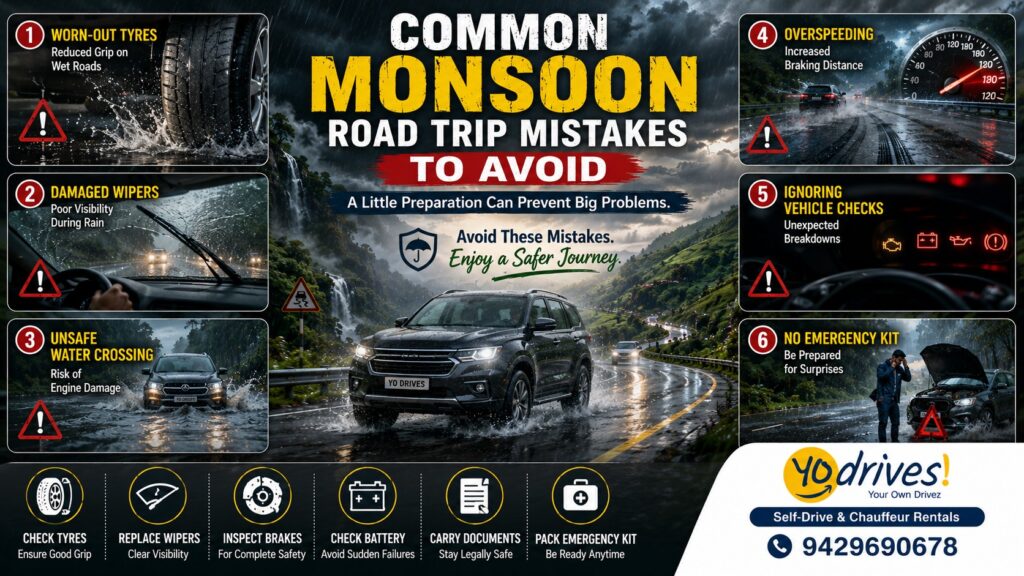
❌ Ignoring tyre condition
❌ Driving with worn-out wipers
❌ Delaying brake inspections
❌ Overestimating road conditions
❌ Entering deep water without checking depth
Avoiding these mistakes can significantly improve safety.
Why Renting a Well-Maintained Vehicle Can Be a Smarter Option
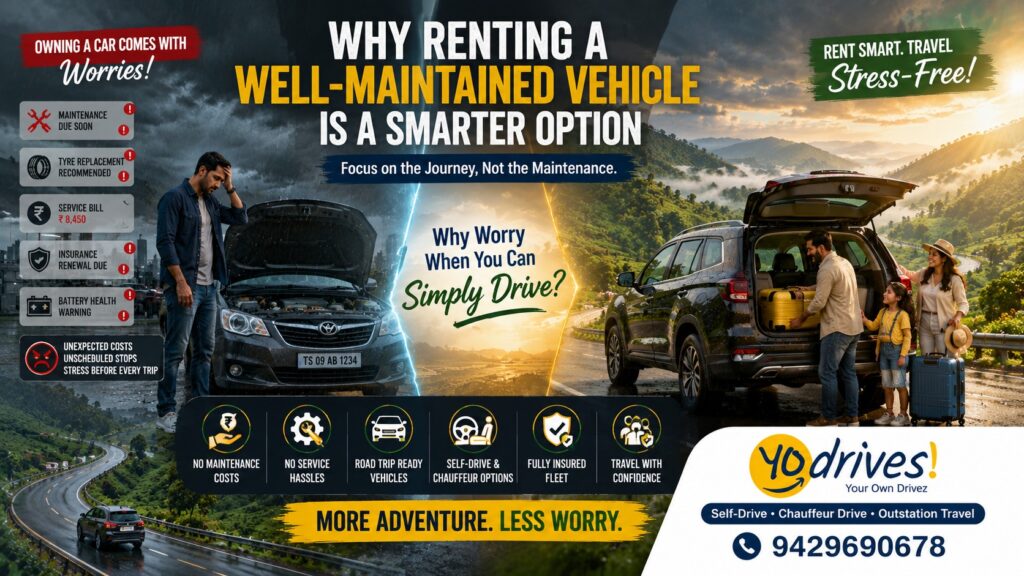
Preparing your vehicle according to a Monsoon Car Checklist requires time, effort, and regular maintenance. From tyre inspections and brake checks to servicing, fluid top-ups, and document verification, ensuring your vehicle is road-ready can be challenging. For travelers looking for a hassle-free alternative, YoDrives offers professionally maintained self-drive cars and chauffeur-driven rentals that are regularly serviced and prepared for safe road travel. Whether you’re planning a weekend getaway, a family vacation, or an outstation trip, YoDrives helps you enjoy your journey without worrying about completing every item on your Monsoon Car Checklist.
FAQs
Why is tyre inspection important in a Monsoon Car Checklist?
Tyre inspection is an essential part of any Monsoon Car Checklist because tyres provide grip on wet roads, improve vehicle stability, and help prevent skidding and hydroplaning during rainy weather.
2. How often should wiper blades be replaced?
Typically every 6–12 months, depending on wear and usage.
3. Is it safe to drive through waterlogged roads?
Only if the water level is shallow and safe to cross.
4. What documents should I carry during a road trip?
Driving license, RC, insurance, and PUC certificate.
5. Why do windshields fog during monsoon?
Moisture and temperature differences cause condensation inside the vehicle.
6. How can I improve visibility during heavy rain?
Use functioning wipers, headlights, and defoggers.
7. Should I service my car before a long monsoon trip?
Yes, servicing your vehicle and completing a Monsoon Car Checklist before a long trip is highly recommended. A pre-trip inspection helps identify potential issues with tyres, brakes, battery, fluids, and other critical components, reducing the risk of breakdowns and improving safety during monsoon travel.
8. What emergency items should be kept in the car?
First-aid kit, torch, tyre inflator, jumper cables, and warning triangle.
9. Why is brake inspection important during rainy weather?
Wet roads increase stopping distances, making effective brakes essential.
10. Is a rental vehicle suitable for monsoon travel?
Yes, especially when provided by a reliable service with regularly maintained vehicles.
Ready for Your Next Monsoon Road Trip?
Whether you’re planning a weekend getaway, a family vacation, an outstation journey, or a business trip, YoDrives offers well-maintained self-drive cars and chauffeur-driven rentals to make your travel safe and comfortable. Every road trip starts with a proper Monsoon Car Checklist, and YoDrives helps simplify the process by providing vehicles that are regularly serviced and prepared for long-distance travel.
🌐 Website: www.yodrives.com
📞 Call/WhatsApp: +91 9429690678
🚗 Self-Drive Cars | Chauffeur Services | Airport Transfers | Outstation Trips
Book your vehicle today and enjoy a hassle free monsoon journey with YoDrives, while leaving the stress of completing a detailed Monsoon Car Checklist behind.
Conclusion
Following a complete Monsoon Car Checklist before a long drive can help make your rainy-season journey safer, smoother, and more enjoyable. A well planned Monsoon Car Checklist ensures that essential components such as tyres, brakes, wipers, lights, battery, and fluid levels are inspected before you hit the road.
By completing this Monsoon Car Checklist, you can reduce the risk of unexpected breakdowns, improve driving safety, and travel with greater confidence during unpredictable weather conditions. Taking a few minutes to prepare your vehicle today can make a significant difference to your comfort and safety throughout your monsoon road trip.
