
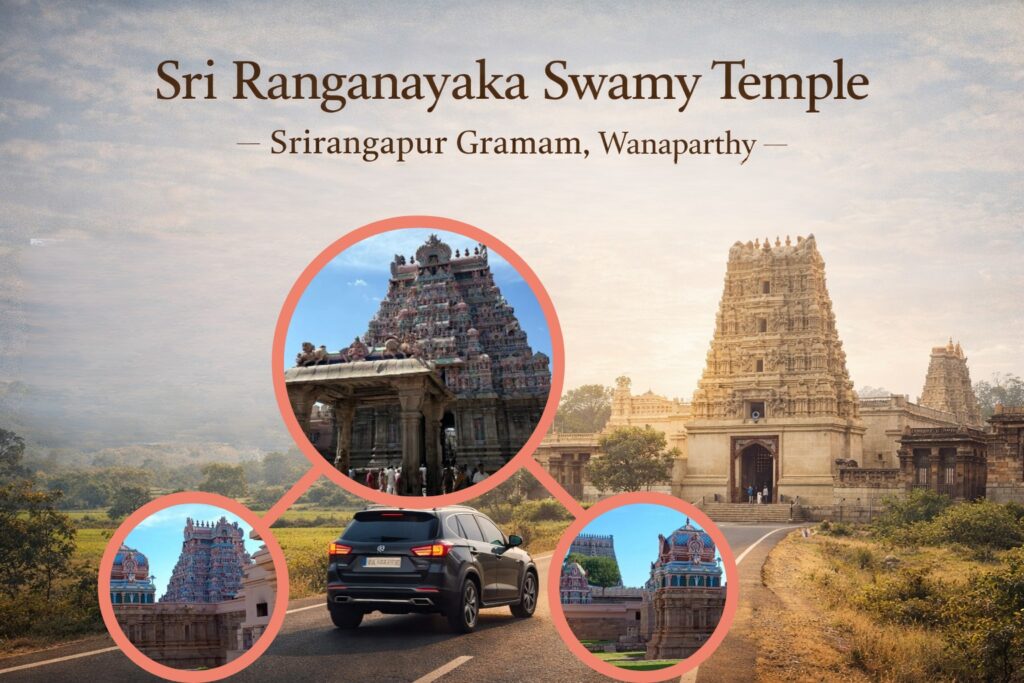
Explore Sri Ranganayaka Swamy Temple Wanaparthy near Hyderabad. Check timings, entry fee, dos & don’ts, history, and travel tips.
Location & Distance from Hyderabad
Srirangapuram is approximately 160–175 km from Hyderabad, making it a comfortable 3-to-4-hour road journey. The route is scenic and peaceful, passing through countryside landscapes, which adds to the spiritual mood even before reaching the temple. Many devotees prefer traveling by car, allowing flexibility to spend quality time at the temple and nearby attractions.
Historical & Religious Significance
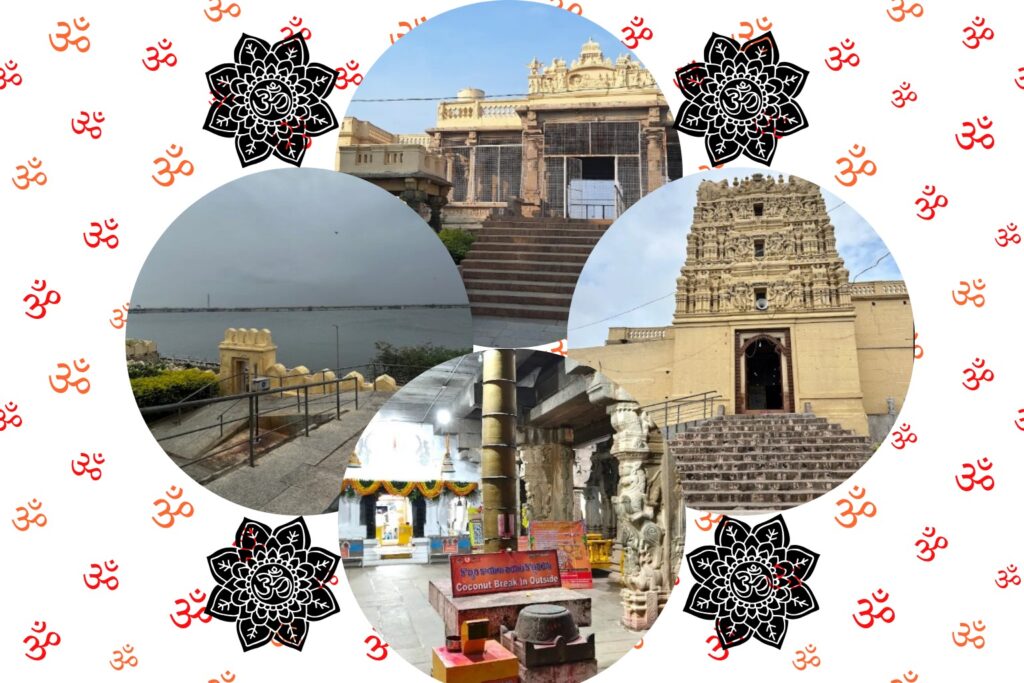
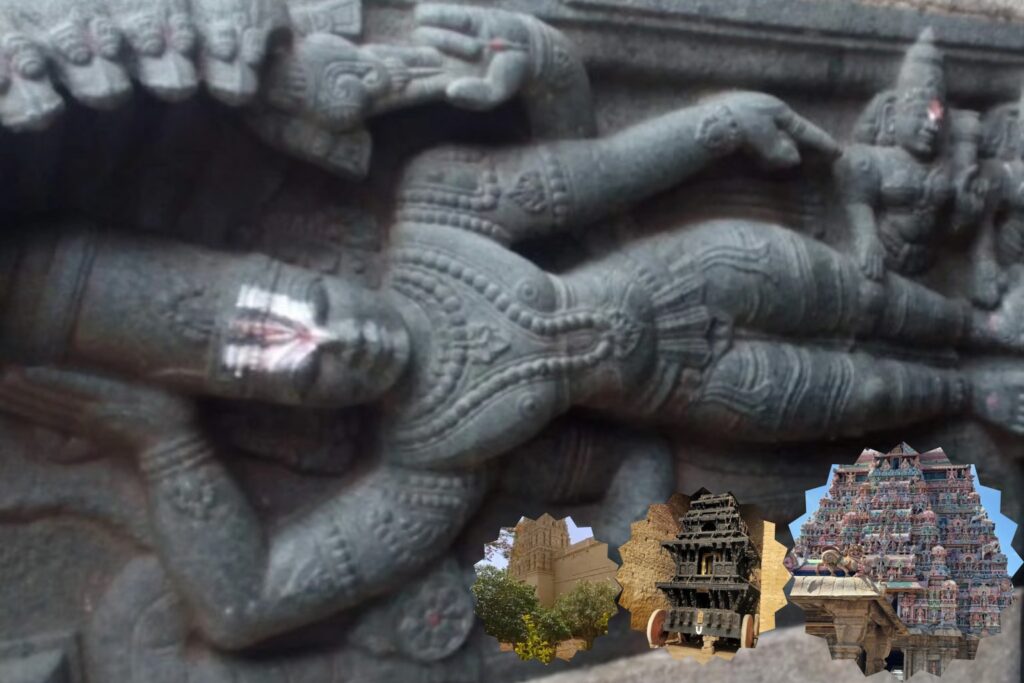
The temple is dedicated to Sri Ranganayakaswamy (Lord Vishnu), worshipped here in a reclining posture similar to Lord Ranganatha of Srirangam. It is believed that the temple was built by the Rajas of Wanaparthy during the 18th century, inspired by the famous Srirangam Temple in Tamil Nadu.
Because of this inspiration, Srirangapuram is often referred to as “Dakshina Srirangam” (Southern Srirangam) of Telangana. The temple holds immense importance for Vaishnava devotees and is known for its peaceful, spiritually charged atmosphere, making it ideal for meditation and prayer.
Architecture – Vijayanagara Grandeur
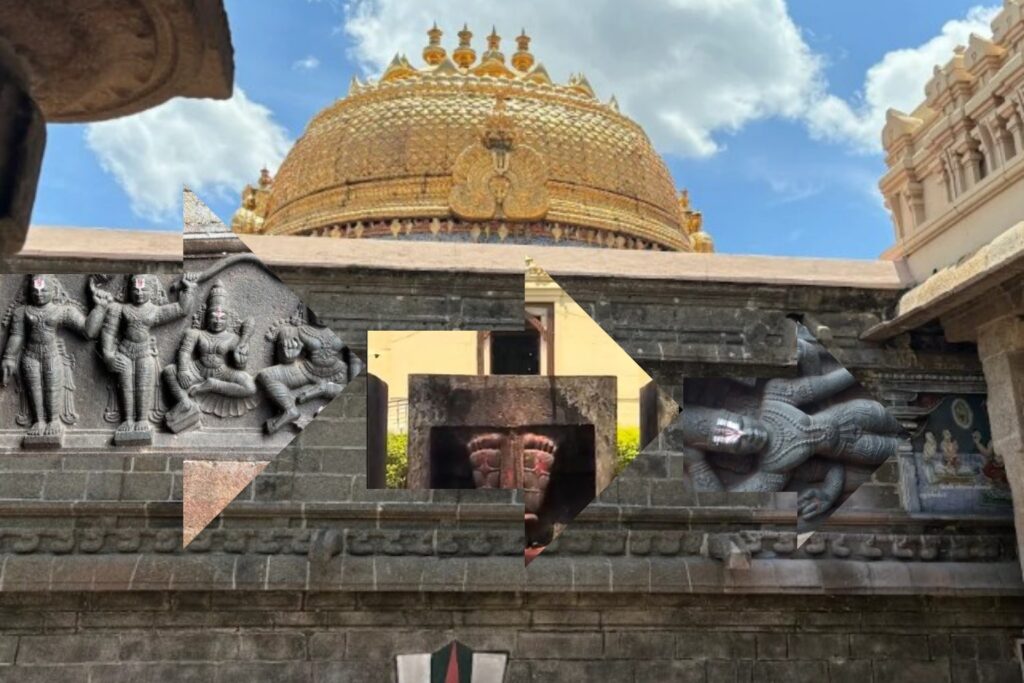
One of the temple’s biggest highlights is its classical Vijayanagara-style architecture. Visitors are immediately drawn to:
- Grand gopurams (temple towers) with intricate carvings
- Spacious mandapas (pillared halls)
- Beautiful stone sculptures reflecting mythological stories
A unique attraction is the Chitrasala, a hall adorned with rare relief paintings and 3D-style murals depicting episodes from Hindu epics. These paintings are preserved carefully and showcase the artistic brilliance of the era.
Ratna Pushkarini Lake & Natural Beauty
The temple is situated beside the Ratna Pushkarini Lake, which greatly enhances its spiritual charm. The calm waters, temple reflections, and surrounding greenery create a tranquil environment rarely found in crowded pilgrimage centres. Early mornings and evenings here are especially soothing, making it a favourite spot for photographers and spiritual seekers alike.
Museum & Cultural Experience
Within the temple complex, visitors can also explore a small museum that displays:
- Ancient artifacts
- Sculptures
- 3D-effect paintings and murals
This adds an educational and cultural dimension to the visit, especially for families and history enthusiasts.
Why Visit Srirangapur Gramam Temple?
- Ideal spiritual getaway from Hyderabad
- Rich Vaishnava heritage and history
- Stunning Vijayanagara architecture
- Peaceful lakeside setting
- Perfect for day trips or weekend spiritual journeys
Temple Timings – Sri Ranganayaka Swamy Temple Wanaparthy
The Sri Ranganayaka Swamy Temple follows traditional Vaishnava temple timings.
🕰️ Daily Darshan Timings:
- Morning: 6:00 AM – 12:30 PM
- Evening: 4:00 PM – 8:00 PM
⏳ Timings may vary slightly on festival days and special rituals.
🎟️ Entry Fee & Darshan Details
- General Entry: ✅ Free
- Special Darshan: ❌ Not applicable (as of now)
- Photography: ❌ Restricted inside sanctum
- Museum Entry: Usually free or nominal charge (subject to temple administration)
This makes the temple highly accessible for families, elderly devotees, and group pilgrims.
✅ Dos & ❌ Don’ts for Visitors
✔️ Dos
- Wear traditional or modest clothing
- Maintain silence and decorum inside the temple
- Follow queue systems during darshan
- Respect temple priests and rituals
- Visit early morning or evening for a peaceful experience
❌ Don’ts
- Avoid wearing shorts, sleeveless tops, or revealing attire
- Do not carry alcohol, tobacco, or non-vegetarian food
- Avoid loud conversations or phone usage
- Do not litter near the Ratna Pushkarini Lake
- Photography inside the sanctum is strictly prohibited

Who Built the Sri Ranganayaka Swamy Temple and Why?
The Sri Ranganayaka Swamy Temple at Srirangapuram was constructed by the Rajas of Wanaparthy, a prominent feudal lineage that ruled parts of present-day southern Telangana during the 18th century. These rulers were devout followers of Vaishnavism, the tradition that worships Lord Vishnu as the Supreme Being.
Why Was the Temple Built?
The primary motivation behind building this temple was deep devotion to Lord Vishnu and a desire to recreate the spiritual essence of the great Srirangam Temple in Tamil Nadu. During that period, traveling long distances to Srirangam was extremely difficult for devotees from the Deccan region.
To address this, the Wanaparthy rulers envisioned Srirangapuram as a “Dakshina Srirangam” (Southern Srirangam)—a sacred alternative where devotees could experience the same spiritual vibrations, rituals, and architectural grandeur without undertaking arduous journeys.
The temple also served as:
- A center of Vaishnava worship in the region
- A royal patronage monument, showcasing religious commitment
- A cultural hub for festivals, rituals, and learning
Its location beside the Ratna Pushkarini Lake was intentionally chosen to mirror the sacred water bodies found in major Vishnu temples and to enhance ritual purity and tranquility.
Detailed Architecture – Vijayanagara Style at Its Finest
The Sri Ranganayaka Swamy Temple is a textbook example of classical Vijayanagara temple architecture, a style that flourished between the 14th and 18th centuries and is known for its grandeur, symmetry, and narrative sculptures.
1. Gopurams (Temple Towers)
At the Sri Ranganayaka Swamy Temple Srirangapuram, the imposing gopurams stand as grand ceremonial gateways, marking the spiritual transition from the outer world to the divine realm. These majestic temple towers are richly carved with:
- Depictions of Vishnu’s avatars
- Mythological scenes from the Ramayana and Mahabharata
- Floral and geometric motifs
The gopurams were designed not just as entrances but as visual markers of sacred space, symbolizing the transition from the material world to the spiritual realm.
2. Mandapas (Pillared Halls)
Inside the Sri Ranganayaka Swamy Temple Srirangapuram complex are expansive mandapas supported by intricately carved stone pillars. Each pillar is unique and artistically detailed, featuring:
- Celestial beings
- Divine attendants
- Decorative yali (mythical lion-like creatures)
These mandapas were used for:
- Ritual gatherings
- Festival processions
- Discourses and devotional music
3. Chitrasala – The Artistic Marvel
One of the most distinctive architectural features is the Chitrasala, a hall adorned with rare relief paintings and murals. These artworks are notable for their 3D-like depth, achieved through layered carving and shading techniques.
The paintings depict:
- Episodes from the life of Lord Vishnu
- Vaishnava saints and traditions
- Symbolic representations of cosmic order
This makes the temple not just a place of worship, but also a living art gallery of devotional expression.
4. Sanctum Sanctorum (Garbhagriha)
At the heart of the Sri Ranganayaka Swamy Temple Srirangapuram lies the Garbhagriha (sanctum sanctorum), which houses Sri Ranganayakaswamy, a revered reclining form of Lord Vishnu. The deity’s placement, posture, and orientation strictly follow Vaishnava Agama Shastra principles, ensuring complete ritual precision, spiritual balance, and divine harmony throughout the temple.
5. Integration with Nature
True to classical Vijayanagara planning, the Sri Ranganayaka Swamy Temple Srirangapuram is harmoniously integrated with its natural surroundings. The adjacent Ratna Pushkarini Lake plays a vital role in enhancing the temple’s spiritual and architectural significance by supporting:
- Ritual bathing
- Festival ceremonies
- Enhancing the meditative ambiance
The combination of stone architecture, water, and open courtyards creates a serene and timeless atmosphere.
In Essence
The Sri Ranganayaka Swamy Temple was built out of devotion, accessibility, and artistic vision. It stands as a symbol of:
- The Vaishnava faith in Telangana
- The architectural brilliance of Vijayanagara traditions
- A ruler’s effort to bring sacred experiences closer to the people
Even today, the temple remains a spiritual retreat, architectural treasure, and historical landmark—quietly preserving centuries of devotion and craftsmanship.
Government Linked Travel Help
Here’s what is available if you want to rely on (or combine with) government transport:
✅ TSRTC state bus services to towns near Srirangapuram and onward local transport (bus/taxi) to the temple
✅ Tourism package services by Telangana State Tourism that can include temple visits
🚗 Practical Tips for Travellers
- Depart early from Hyderabad using a TSRTC or private bus to Suryapet/Wanaparthy and then taxi to Srirangapuram.
- Consider self-drive or private taxi for greater flexibility and timeliness, especially if visiting with family or elders
- Check with Telangana Tourism offices or travel agents for customized pilgrimage coach packages that may include Srirangapuram alongside other temples in a day tour or weekend tour
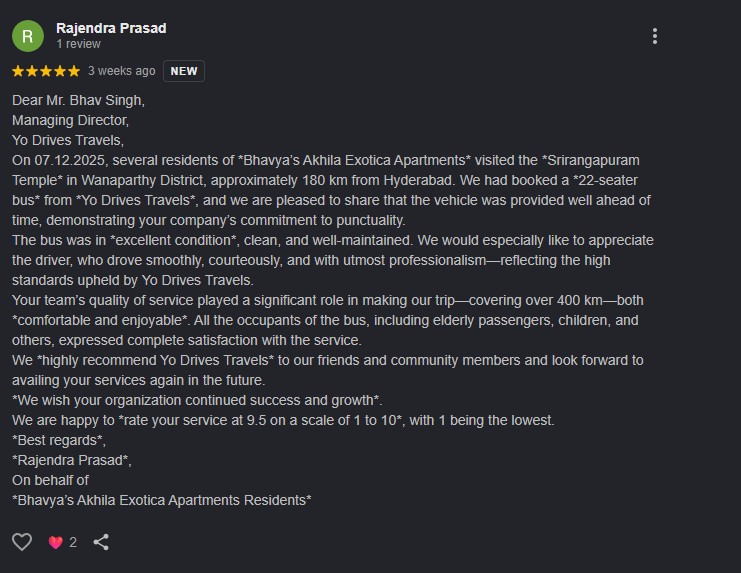
Testimonials:
❓ Frequently Asked Questions – Sri Ranganayaka Swamy Temple, Srirangapuram
1. Where is Sri Ranganayaka Swamy Temple located?
The temple is located in Srirangapuram village, Pebbair Mandal, Wanaparthy District, Telangana. It is popularly known as Srirangapur Gramam Temple.
2. How far is Srirangapur Gramam Temple from Hyderabad?
The distance from Hyderabad to Srirangapuram is approximately 160–175 km, and it takes about 3 to 4 hours by road, depending on traffic and route.
3. Who built Sri Ranganayaka Swamy Temple and when?
The temple is believed to have been built by the Rajas of Wanaparthy in the 18th century, inspired by the famous Srirangam Ranganatha Temple in Tamil Nadu.
4. Why is this temple considered spiritually significant?
The temple is dedicated to Lord Vishnu as Sri Ranganayakaswamy and is considered a Vaishnava spiritual center in Telangana. It is often referred to as the “Dakshina Srirangam” due to its resemblance and devotion style.
5. What is special about the Ratna Pushkarini Lake?
The temple is located beside the Ratna Pushkarini Lake, which enhances its spiritual and scenic beauty. The calm lakeside setting creates a peaceful atmosphere for prayer and meditation.
6. What is the best time to visit Sri Ranganayaka Swamy Temple?
The best time to visit is between October and March, when the weather is pleasant and ideal for temple visits and sightseeing.
7. Is YoDrives suitable for family or group travel to Sri Ranganayaka Temple ?
Yes, YoDrive has a well maintained fleet of cars that will provide self drive and chauffeur driven cars too. It is highly suitable for family pilgrimages, elderly devotees and get together’s related to offices etc.
8. Where can I get complete details of Yodrives services and bookings ?
Please visit the official YoDrives website https://www.yodrives.com/ to get more details. It will give details regarding the vehicle options, availability, packages and bookings.
9. Is hiring private cars from YoDrives safe and secure ?
Yes, YoDrives provides safe and secure cars for self drive and chauffeur based cars too. They provide flexibility, comfort and convenience.
🧘 Conclusion
The Sri Ranganayaka Swamy Temple at Srirangapuram is much more than a place of worship—it is a destination where devotion, history, architecture, and nature come together in perfect harmony. From its Vijayanagara-style grandeur and sacred Ratna Pushkarini lake to its calm, crowd-free atmosphere, the temple offers a deeply enriching spiritual experience.For devotees seeking a peaceful Vaishnava pilgrimage near Hyderabad, history enthusiasts drawn to royal-era temples, or travelers looking for a serene spiritual escape, Srirangapur
