Complete travel guide to Saleshwaram Lingamayya Temple including trek details, route, tips, festival dates, and travel options from Hyderabad.
Introduction
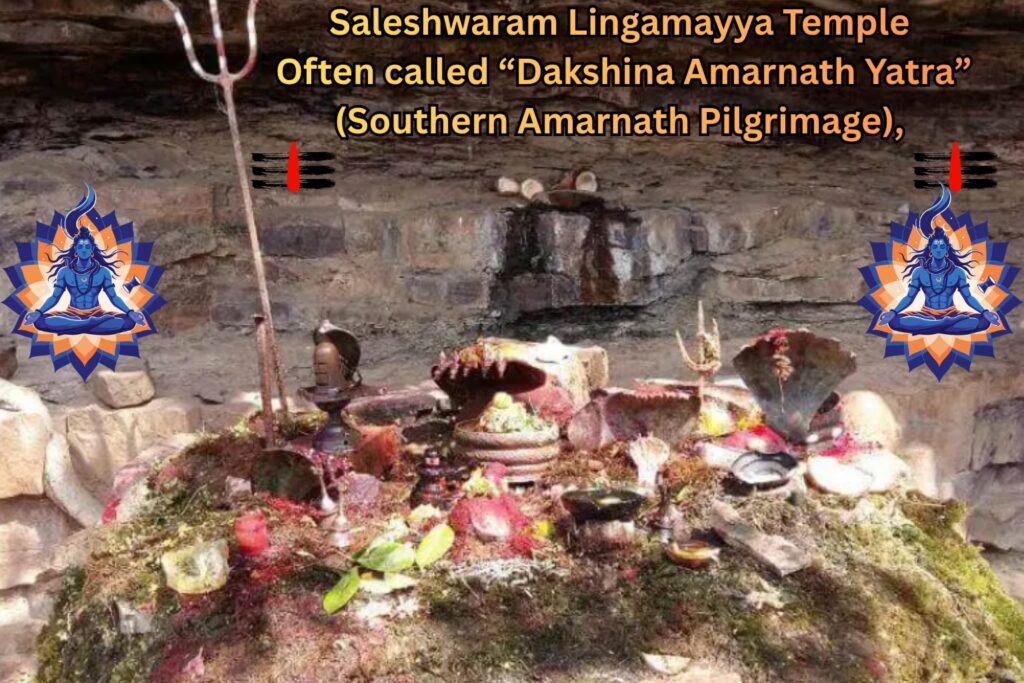
Deep inside the untouched wilderness of the Nallamala forest lies one of the most fascinating spiritual destinations in South India. Saleshwaram Lingamayya Temple is not just a place of worship but a journey into nature, faith, and endurance.
What makes this destination extraordinary is its rare accessibility. Unlike other Shiva temples, this sacred cave shrine opens only once every year during the Chaitra Pournami festival period. Because of this, thousands of devotees plan their pilgrimage months in advance.
Many devotees describe this pilgrimage as the Southern version of the Amarnath Yatra, because reaching the shrine requires trekking through forest terrain, crossing natural streams, and walking through rocky paths.
For spiritual seekers, adventure travelers, and Shiva devotees, this journey becomes more than a visit — it becomes a life experience.
Where is Saleshwaram Located?
This sacred shrine is located deep inside the Nallamala forest region near Srisailam. The location falls inside a protected tiger reserve zone which is why entry remains restricted most of the year.
Important location details:
Located near Srisailam forest region
Around 220 km from Hyderabad
Inside Amrabad Tiger Reserve
Requires forest department monitoring
Accessible only during festival days
The surrounding environment includes thick forest cover, hills, valleys, medicinal plants, waterfalls, and caves. This natural setting adds to the mystical feeling experienced by visitors.
According to local beliefs and spiritual traditions, this cave shrine has existed for centuries. References indicate the site may have been used by sages for meditation and penance.
Many believe:
The shrine was discovered by sages
Lord Shiva appeared here naturally
The cave served as meditation space
Tribal communities protected the shrine
Unlike modern temples built with structures, this shrine retains its natural formation, which increases its spiritual importance.
What Makes This Shiva Shrine Special?
Several factors make this pilgrimage different from other temple visits.
Unique characteristics include:
Natural Shiva Lingam formation
Cave temple environment
Water stream flowing over Lingam
Dense forest surroundings
Limited yearly access
Tribal spiritual connection
Because of these rare features, many travelers consider visiting Saleshwaram Lingamayya Temple a once-in-a-lifetime opportunity.
Spiritual Meaning of the Journey
Unlike easy-access temples, this pilgrimage requires effort. Devotees often believe the trek itself represents removing obstacles from life.
Spiritual symbolism of the journey:
Forest represents life challenges
Trek represents effort
Cave represents inner peace
Water represents purification
Darshan represents divine blessing
This symbolic interpretation is why many pilgrims value the journey as much as the destination.
Festival Time – When Temple Opens
The temple opens during Chaitra Pournami usually falling between March and April.
During this time:
Forest department allows entry
Temporary arrangements are made
Devotees gather in large numbers
Tribal rituals take place
Special prayers are conducted
The festival atmosphere creates a unique spiritual energy rarely seen in remote temples.
Trekking Details and Difficulty
Reaching the shrine requires trekking through forest routes.
Morning trekking reduces fatigue and improves safety.
Packing Checklist for Visitors
Carrying the right items can make your journey comfortable.
Essentials:
Water bottles
Energy bars
First aid kit
Torch light
Power bank
Trekking shoes
Backpack
Cap
Optional but useful:
Walking stick
Electrolyte packets
Rain cover
Extra socks
Preparation helps avoid unnecessary risks.
Road Travel Planning from Hyderabad
Most travelers start their journey from Hyderabad.
Travel options include:
Self drive cars TSRTC buses Travel groups Private taxis
Driving is often preferred because it allows flexible timing and better coordination for the trek schedule.
Why Self Drive Travel Works Best
For remote temple trips like this, self driving offers advantages:
Control over departure time
No dependency on bus schedules
Comfortable group travel
Easy luggage handling
Better return planning
This is why many pilgrims now prefer self-drive trips.
Travel Experience Story
Many visitors describe their journey as transformational.
A typical experience:
Starting early morning from Hyderabad, travelers reach the forest belt by afternoon. After resting, they begin the trek next morning with chants of Lord Shiva. The sounds of birds and flowing water replace city noise.
After hours of trekking, reaching the cave gives emotional satisfaction. Seeing the natural Shiva Lingam under the waterfall creates a powerful spiritual moment.
Many devotees say the fatigue disappears instantly after darshan.
Safety Guidelines Every Visitor Must Follow
Safety Do’s
Carry enough water Stay with group Follow officials instructions Wear proper footwear Keep emergency contacts
Safety Don’ts
Do not trek alone Do not ignore warnings Avoid risky shortcuts Do not feed animals Avoid plastic waste
Responsible travel protects both visitors and nature.
Travel Planning Tips
Smart planning improves experience.
Best practices:
Book vehicles early Check festival dates Travel with experienced people Start early morning Carry offline maps
Planning reduces stress during pilgrimage.
Customer Testimonials
About YoDrives – Smart Travel Choice
For travelers planning road trips, having a reliable vehicle partner is important.
YoDrives self drive car rental service helps travelers plan comfortable journeys to destinations like Srisailam and surrounding spiritual locations.
YoDrives advantages:
Reliable vehicles Transparent pricing Easy booking Suitable for groups Good for long drives
Many travelers now combine spiritual travel with road trip experiences using self drive services.
1. Where is Saleshwaram Lingamayya Temple located?
Saleshwaram Lingamayya Temple is located deep inside the Nallamala forest near Srisailam on the Telangana–Andhra Pradesh border. The temple lies inside the Amrabad Tiger Reserve and is accessible only during the annual Jathara festival.
2. Why does Saleshwaram Lingamayya Temple open only once a year?
Saleshwaram Lingamayya Temple opens only during Chaitra Pournami to protect wildlife, maintain ecological balance, and ensure visitor safety since the temple is located inside a protected forest zone.
3. How difficult is the trek to Saleshwaram Lingamayya Temple?
The trek to Saleshwaram Lingamayya Temple is considered moderately difficult. Visitors must walk about 4–6 km through forest paths, rocky terrain, and small water streams.
4.What should I carry when visiting Saleshwaram Lingamayya Temple?
Visitors to Saleshwaram Lingamayya Temple should carry water, snacks, trekking shoes, a torch, a basic medical kit, and follow all forest safety guidelines.
5. What is the distance from Hyderabad to Saleshwaram Lingamayya Temple?
The distance from Hyderabad to Saleshwaram Lingamayya Temple is approximately 200–220 km. The journey takes around 5–6 hours by road followed by trekking.
6. Is permission required to visit Saleshwaram Lingamayya Temple?
Yes, visitors can enter Saleshwaram Lingamayya Temple only during the official Jathara dates and must follow forest department guidelines and safety rules.
7.Is accommodation available?
Mostly basic arrangements during festival.
8.Is mobile network available?
Limited or no signal inside forest.
9. Can families visit Saleshwaram Lingamayya Temple?
Yes, families can visit Saleshwaram Lingamayya Temple if they are physically fit for trekking. However, elderly people and small children should plan carefully due to the trekking difficulty.
10. What is special about Saleshwaram Lingamayya Temple compared to other Shiva temples?
Saleshwaram Lingamayya Temple is unique because it is a natural cave shrine, contains a self-formed Shiva Lingam, has a waterfall flowing nearby, and is open only once a year.
11. What is the best time to visit Saleshwaram Lingamayya Temple?
The best time to visit Saleshwaram Lingamayya Temple is during the Chaitra Pournami festival in March or April when the temple is officially opened to devotees.
12. How can I travel comfortably to Saleshwaram Lingamayya Temple?
Travelers usually reach Srisailam by car or bus and then trek to Saleshwaram Lingamayya Temple. Many visitors prefer self-drive options for flexible travel planning.
13. How can YoDrives help in planning a trip to Saleshwaram Lingamayya Temple?
YoDrives helps travelers by providing reliable self-drive cars for trips to Saleshwaram Lingamayya Temple, making group travel easier, flexible, and more comfortable compared to depending only on public transport.
Final Conclusion
Saleshwaram Lingamayya Temple stands as one of the most unique spiritual destinations in South India. The combination of forest trekking, rare access, and natural Shiva shrine makes it different from traditional temple visits.
The pilgrimage teaches patience, preparation, devotion, and respect for nature.
For those seeking something beyond regular tourism, this journey offers a meaningful spiritual adventure.
With proper planning, safety awareness, and the right travel arrangements, this pilgrimage can become a memorable life experience.
Discover auspicious wedding dates 2026 with month-wise Hindu marriage muhurthams, astrology insights, and Telugu wedding traditions. Plan your perfect wedding date.
The arrival of a new year brings new beginnings, happiness, and for many families, exciting wedding plans. Parents begin searching for suitable alliances, engaged couples finalize their big day, and families prepare for grand celebrations.
In Hindu tradition, marriage is not just a social contract but a sacred samskara (life ritual). Selecting the right wedding muhurtham is believed to bring harmony, prosperity, and lifelong happiness to the couple.
This guide explains the auspicious wedding dates in 2026, how muhurthams are calculated, and important spiritual factors considered before selecting a marriage date.
Wedding muhurthams are traditionally calculated based on Panchang principles including tithi, nakshatra, and planetary positions as explained by Drik Panchang.
What Makes a Wedding Date Auspicious in Hindu Tradition?
According to Vedic astrology, selecting Auspicious Wedding Dates 2026 depends on several Panchang factors. A marriage date is considered suitable only when these elements align positively.
1. Tithi (Lunar Day)
Some lunar days are considered highly favorable for weddings:
Favourable Tithis:
Dwitiya (2nd)
Tritiya (3rd)
Panchami (5th)
Saptami (7th)
Dashami (10th)
Ekadashi (11th)
Trayodashi (13th)
Usually avoided:
Amavasya (New Moon)
Pournami (Full Moon)
These tithis are believed to support harmony and prosperity in married life.
2. Nakshatra (Star Alignment)
The Moon’s constellation plays a major role in determining wedding muhurthams.
Common auspicious nakshatras include:
Rohini
Mrigashira
Magha
Uttara Phalguni
Hasta
Swati
Anuradha
Uttarashada
Uttarabhadra
Revati
These nakshatras symbolize stability, prosperity, and strong family bonds.
3. Favorable Weekdays
Certain weekdays are considered ideal for marriage:
Best days for weddings:
Monday
Wednesday
Thursday
Friday
Usually avoided:
Tuesday
Saturday (unless horoscope permits)
4. Planetary Strength (Guru & Shukra)
Jupiter (Guru) and Venus (Shukra) are important marriage planets.
When they enter combustion (Moudhyami), weddings are avoided.
Important note:
No wedding muhurthams in January 2026
Muhurthams resume after February 14, 2026
5. Adhika Masam in 2026
In 2026, Adhika Jyeshtha Masam occurs from May 18 to June 11.
This period is meant for:
Spiritual practices
Charity
Pilgrimages
Therefore, weddings are avoided during this time.
6. Lagna (Wedding Time Selection)
Even if the date is good, the exact time must avoid:
Rahu Kalam
Yamagandam
Gulika Kalam
Durmuhurtham
Varjyam
This ensures a strong cosmic beginning for the marriage.
Month Wise Auspicious Wedding Dates in 2026
Below are the general Auspicious Wedding Dates 2026 based on favorable Panchang combinations. The exact marriage muhurtham timing should always be confirmed by a qualified astrologer based on the bride and groom’s horoscopes.
February 2026 Wedding Muhurthams
Auspicious Dates:
19, 20, 21, 22, 24, 25, 26
Wedding muhurthams resume after planetary combustion ends.
Reasons February is favorable:
Jupiter and Venus regain strength
Good lunar days occur
Favorable nakshatras appear
Late February is considered ideal for couples planning a spiritually blessed beginning.
March 2026 Wedding Muhurthams
Auspicious Dates:
4, 5, 6, 7, 8, 11, 12, 13, 14, 20, 21, 25, 29
March is one of the busiest wedding months.
Reasons:
Growth-oriented lunar phases
Stable nakshatras
Spring season symbolism
Spring represents new beginnings, making it spiritually aligned with marriage.
It is reserved for spiritual activities rather than celebrations.
3.Can we marry without horoscope matching?
No. Personal planetary positions may change suitability.
4.What is more important date or time?
Muhurtham time is equally important.
5.Who finalizes the muhurtham?
A qualified astrologer or priest.
6.Does YoDrives provide vehicles for wedding events?
Yes, YoDrives provides self-drive cars, chauffeur-driven cars, tempo travellers, and buses suitable for wedding transportation.
7.Can I book vehicles for multiple wedding functions?
Yes, you can book vehicles for engagement, haldi, mehendi, reception, and wedding day transportation.
8.Does YoDrives provide drivers with vehicles?
Yes, both self-drive and driver packages are available based on your requirement.
9.How early should I book wedding transportation?
It is recommended to book at least 1–2 weeks in advance to ensure vehicle availability.
10.Does YoDrives provide luxury cars for bride and groom travel?
Yes, luxury and premium cars are available for special wedding travel needs.
Customer Testimonials
Conclusion
Choosing the right Auspicious Wedding Dates 2026 helps couples start their married life with positivity and divine blessings. Along with selecting the perfect muhurtham, proper travel planning makes wedding celebrations smooth and stress-free. YoDrives helps families manage wedding transportation easily with reliable and comfortable vehicle options. Plan your 2026 wedding smartly with the right date and the right travel partner.
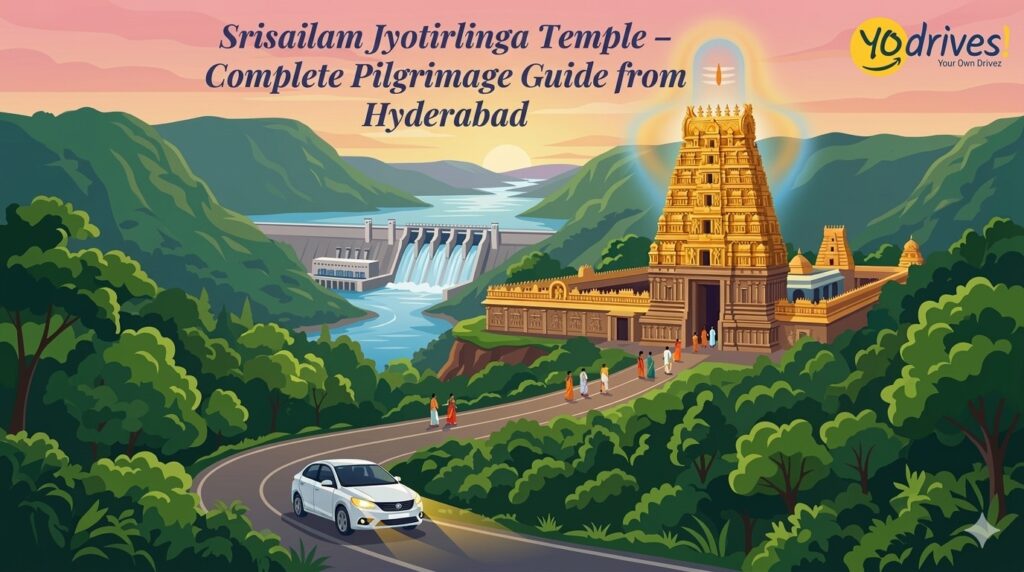
Srisailam is one of the most sacred pilgrimage destinations in India and home to the Mallikarjuna Jyotirlinga, one of the twelve Jyotirlingas of Lord Shiva. Located in the scenic Nallamala Hills of Andhra Pradesh, the temple sits on the banks of the sacred Krishna River and attracts millions of devotees every year.
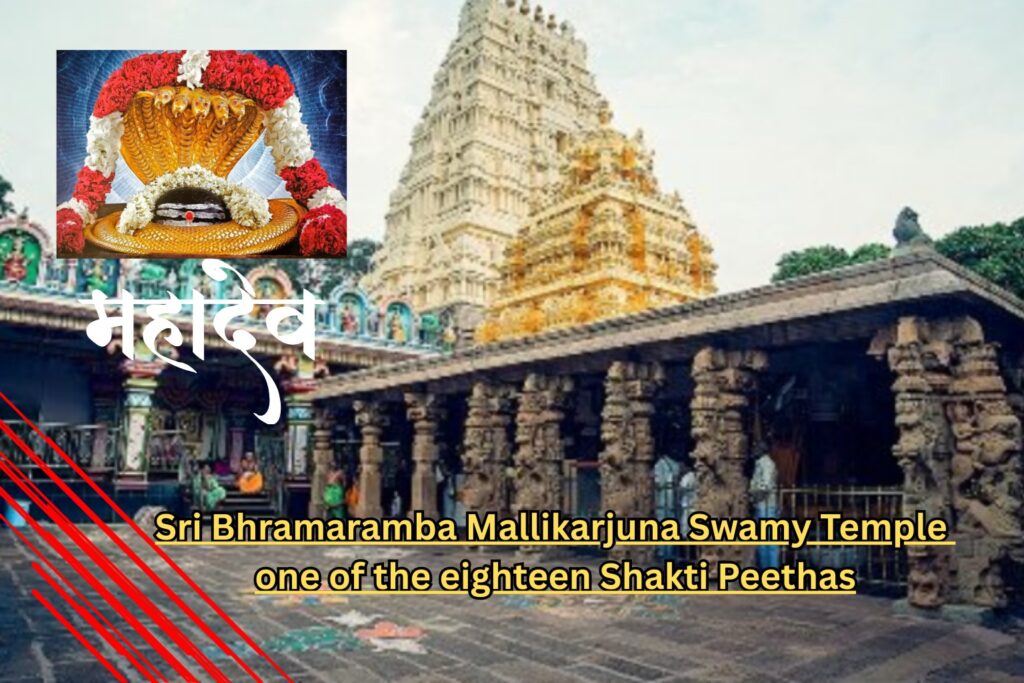
The Sri Bhramaramba Mallikarjuna Swamy Temple is unique because it is not only a Jyotirlinga shrine but also houses Bhramaramba Devi, one of the eighteen Shakti Peethas. This rare combination of Shiva and Shakti in a single temple complex makes Srisailam one of the most powerful spiritual centers in India.
For devotees traveling from Hyderabad, the journey to Srisailam is not just a pilgrimage but also a beautiful road trip through forests, hills, and scenic ghat roads.
Visit the sacredSrisailam Mallikarjuna Jyotirlinga, one of the 12 Jyotirlingas of Lord Shiva located in Andhra Pradesh. Discover temple history, darshan timings, Hyderabad to Srisailam distance, travel routes, nearby attractions, and pilgrimage tips in this complete guide.
Location and Significance of Srisailam
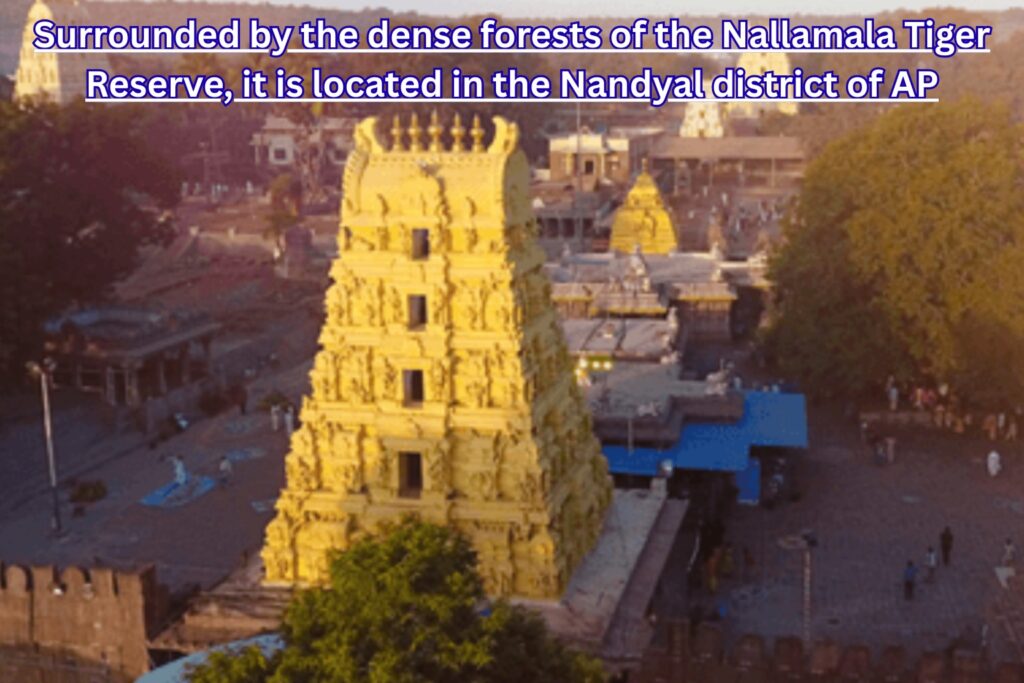
Srisailam is located in the Nandyal district of Andhra Pradesh, surrounded by the dense forests of the Nallamala Tiger Reserve. The temple is situated at an elevation on the Nallamala hills and overlooks the Krishna River valley.
The temple complex is popularly known as:
Sri Bhramaramba Mallikarjuna Swamy Temple
It holds immense importance in Shaivism and Shaktism traditions. Devotees believe that worshiping Lord Mallikarjuna here can cleanse sins, bring spiritual liberation, and grant divine blessings. The temple is believed to be extremely ancient, with references found in the Skanda Purana, which describes Srisailam as a sacred mountain where Lord Shiva manifested as a Jyotirlinga.
The Legend Behind Mallikarjuna Jyotirlinga
The origin of the Mallikarjuna Jyotirlinga is deeply rooted in Hindu mythology.
According to legend, Lord Shiva and Goddess Parvati once decided to find out which of their two sons Lord Ganesha or Lord Kartikeya was wiser. They proposed a challenge: whoever could circle the world three times first would win.
Lord Kartikeya immediately mounted his peacock and set off on a journey around the world. Lord Ganesha, however, simply walked around his parents three times, declaring that his parents were his entire universe.
Impressed by his wisdom, Shiva and Parvati declared Ganesha the winner.
When Kartikeya returned and learned what happened, he felt upset and left Mount Kailash. To console him, Lord Shiva and Goddess Parvati followed him and settled at Srisailam, where Shiva manifested as Mallikarjuna Jyotirlinga.
The name Mallikarjuna comes from two Sanskrit words:
Mallika – Goddess Parvati
Arjuna – Lord Shiva
Thus the temple represents the eternal union of Shiva and Shakti.
Architecture of the Temple
The Srisailam temple showcases the beautiful Dravidian style of temple architecture.
The temple complex includes:
Tall gopurams (temple towers)
Intricate stone carvings
Ancient mandapas
Sculptures depicting Hindu mythology
Key architectural highlights include:
1. Rajagopuram
The massive entrance tower is decorated with carvings of gods, saints, and mythological stories.
2. Garbhagriha (Sanctum)
The inner sanctum houses the Mallikarjuna Jyotirlinga, where devotees perform abhishekam and darshan.
3. Bhramaramba Devi Temple
Located within the same complex, dedicated to Goddess Bhramaramba.
4. Sahasra Lingas
A sacred area with thousands of small Shiva Lingas carved in stone.
The temple has undergone renovations during different dynasties including the Satavahanas, Chalukyas, Vijayanagara rulers, and the Kakatiya dynasty.
Spiritual Importance of Srisailam
Srisailam holds a very special place in Hindu spirituality for several reasons:
1. One of the 12 Jyotirlingas
Mallikarjuna is one of the twelve Jyotirlingas, making it one of the most powerful Shiva temples in India.
2. One of the 18 Shakti Peethas
The temple of Bhramaramba Devi is one of the major Shakti Peethas.
3. Shiva and Shakti Together
Srisailam is the only place where both a Jyotirlinga and Shakti Peeth coexist, making it spiritually unique.
4. Moksha Kshetra
Many scriptures describe Srisailam as a place where devotees can attain moksha (liberation).
Major Festivals Celebrated
Thousands of devotees visit Srisailam especially during major Hindu festivals.
Maha Shivaratri
This is the biggest festival celebrated at Srisailam. The temple hosts Brahmotsavams, processions, and special rituals lasting several days.
Karthika Masam
During the holy month of Kartika, devotees perform deepa puja and Shiva worship.
Ugadi and Navaratri
These festivals are also celebrated with special poojas and temple decorations.
Hyderabad to Srisailam Temple – Complete Travel Guide
One of the most popular pilgrimage routes in South India is the Hyderabad to Srisailam road journey.
Distance from Hyderabad
The distance between Hyderabad and Srisailam is approximately 213 km, depending on the route.
Travel Time
The journey usually takes around 4 to 6 hours by road.
Best Route from Hyderabad to Srisailam
The most common route is:
Hyderabad → Kalwakurthy → Dornala → Srisailam
Most travelers take NH 765, which leads directly into the Nallamala forest region.
This route is famous for its scenic beauty, including:
Nallamala forest
Hill roads
Krishna river valley
Srisailam dam views
Attractions on the Way
While traveling from Hyderabad to Srisailam, several attractions can be explored.
Srisailam Tiger Reserve
One of India’s largest tiger reserves, located in the Nallamala forest.
Srisailam Dam
A massive hydroelectric dam built across the Krishna River.
Pathala Ganga
A sacred ghat where devotees take a holy dip in the Krishna River.
Sakshi Ganapati Temple
Devotees believe Lord Ganesha records their visit to Srisailam.
Darshan and Temple Timings
Typical temple timings:
Morning Darshan 4:30 AM – 3:30 PM
Evening Darshan 6:00 PM – 10:00 PM
Special rituals include:
Abhishekam
Rudrabhishekam
Kumkumarchana
Sparsha Darshan
It is recommended to check the official temple website for updated timings.
Best Time to Visit Srisailam
The best months to visit are:
October – February
During this time:
Weather is pleasant
Forest scenery is beautiful
Ideal for road trips
Monsoon visits can also be scenic but the ghat roads may become slippery.
Travel Options from Hyderabad
By Car
Driving is the most popular option due to the scenic route.
Travel time: 4–5 hours
By Bus
APSRTC and TGSRTC buses operate frequently between Hyderabad and Srisailam.
By Taxi
Private taxis and cab services are widely available for convenient travel. You can also book a self-drive car from YoDrives for flexible and comfortable trips. Visit https://www.yodrives.com to choose from well-maintained vehicles at affordable prices.
Tips for Pilgrims Visiting Srisailam
Start your journey early in the morning.
Carry drinking water and snacks during the forest route.
Book darshan tickets online during peak seasons.
Avoid late night travel on ghat roads.
Visit nearby temples like Sakshi Ganapati and Pathala Ganga.
1. Where is Srisailam Mallikarjuna Jyotirlinga located?
The Mallikarjuna Jyotirlinga is located in Srisailam town in Nandyal district of Andhra Pradesh, India. The temple is situated in the Nallamala Hills on the banks of the Krishna River.
2. What is the distance from Hyderabad to Srisailam Temple?
The distance from Hyderabad to Srisailam is approximately 213 km, and the journey usually takes 4 to 5 hours by road through the scenic Nallamala forest route.
3. Why is Srisailam temple famous?
Srisailam is famous because it houses Mallikarjuna Jyotirlinga, one of the 12 sacred Jyotirlingas of Lord Shiva. It is also home to Bhramaramba Devi, which is one of the 18 Shakti Peethas, making it a very powerful pilgrimage destination.
4. What is the best time to visit Srisailam Temple?
The best time to visit Srisailam is between October and February, when the weather is pleasant and ideal for temple visits and sightseeing.
5. What are the temple timings of Srisailam Mallikarjuna Temple?
The temple generally opens around 4:30 AM and closes around 10:00 PM. Darshan is available in both morning and evening sessions with special poojas conducted throughout the day.
6. Can we travel to Srisailam by bus from Hyderabad?
Yes, TSRTC and APSRTC buses operate daily between Hyderabad and Srisailam. Both ordinary and deluxe buses are available, making it a convenient option for pilgrims.
7. What are the main attractions near Srisailam Temple?
Popular places to visit near the temple include:
Srisailam Dam
Pathala Ganga
Sakshi Ganapati Temple
Srisailam Tiger Reserve
Akka Mahadevi Caves
8. Is Srisailam Temple both Jyotirlinga and Shakti Peetha?
Yes, Srisailam is unique because it is both a Jyotirlinga shrine (Mallikarjuna Swamy) and a Shakti Peetha (Bhramaramba Devi) located in the same temple complex.
9. Are private vehicles allowed on the Srisailam forest route?
Yes, private vehicles are allowed. However, the route passes through the Nallamala forest area, and travelers must follow forest department rules and travel during permitted hours.
10. How much time is required to visit Srisailam Temple?
Most pilgrims can complete darshan and nearby sightseeing in one day, but many visitors prefer staying one or two days to explore Srisailam dam, temples, and scenic forest areas.
Conclusion
Srisailam is more than just a temple; it is a spiritual experience surrounded by nature. The powerful presence of Lord Shiva as Mallikarjuna Jyotirlinga combined with the divine energy of Bhramaramba Devi makes this place deeply sacred. The serene forests of Nallamala, the flowing Krishna River, and the ancient temple architecture create an atmosphere that fills devotees with peace and devotion. Whether you are a pilgrim, spiritual seeker, or traveler exploring South India, a visit to Srisailam Mallikarjuna Jyotirlinga is truly unforgettable.
Explore Ananthagiri Hills near Hyderabad – history, temples, trekking, famous food, travel tips, things to do, and what not to do on your trip.
Introduction
If you are searching for a peaceful getaway close to Hyderabad, Ananthagiri Hills is one of the best destinations to explore. Located in the Vikarabad district of Telangana, this beautiful hill station is known for its dense forests, refreshing weather, trekking trails, scenic viewpoints, and spiritual temples.
Situated about 80 km from Hyderabad, Ananthagiri Hills attracts travelers looking for a relaxing weekend trip. Families, friends, and office groups often visit this place to enjoy nature, adventure, and a calm environment away from city noise.
The journey itself is enjoyable, especially if you travel by road. Booking a self-drive car from YODrives allows you to explore the hills comfortably and stop at scenic locations along the way.
History of Ananthagiri Hills
Ananthagiri Hills has a rich cultural and historical background. The region dates back several centuries and has been associated with multiple dynasties that ruled Telangana.
During ancient times, the region was believed to have been influenced by the Kakatiya dynasty, known for building temples and strengthening cultural traditions. Later, the area came under the Qutb Shahi rulers, followed by the Nizams of Hyderabad.
One of the major historical landmarks in this region is the Anantha Padmanabha Swamy Temple, which is believed to be several centuries old. The temple has been an important pilgrimage site for devotees visiting the hills.
Another interesting historical fact is that Ananthagiri Hills is considered the origin point of the Musi River, which flows through Hyderabad. Because of its water resources and dense forests, the region played an important ecological role for centuries.
Even today, the hills maintain their historical charm and natural beauty, making them one of the most loved tourist spots near Hyderabad.
Speciality of Ananthagiri Hills
Ananthagiri Hills is unique because it offers a combination of nature, adventure, and spirituality.
Beautiful Forest Landscape
The hills are covered with dense greenery and forest areas, providing a refreshing atmosphere for visitors.
Ideal Weekend Destination
Because it is located close to Hyderabad, travelers can easily plan a one-day or weekend trip.
Trekking and Adventure Activities
Adventure lovers often visit the hills for trekking and hiking. The forest trails make the experience exciting and scenic.
Scenic Sunrise and Sunset
The viewpoints in Ananthagiri Hills provide breathtaking sunrise and sunset views that are perfect for photography.
Spiritual Significance
The presence of ancient temples adds spiritual importance to the destination.
Famous Temples in Ananthagiri Hills
Anantha Padmanabha Swamy Temple
The Anantha Padmanabha Swamy Temple is the most important temple in the region.
This temple is dedicated to Lord Vishnu, worshipped in the form of Anantha Padmanabha. Devotees believe that visiting this temple brings peace and blessings.
The temple is surrounded by hills and forests, creating a calm and spiritual atmosphere for visitors. Many tourists include this temple visit as part of their trip to Ananthagiri Hills.
Things to Do in Ananthagiri Hills
There are several activities visitors can enjoy during their trip.
Trekking
Trekking is one of the most popular activities here. The trails pass through forests, hills, and rocky paths, making it an exciting experience for adventure lovers.
Nature Walks
Visitors can explore forest areas and enjoy the peaceful surroundings while taking relaxing nature walks.
Camping
Camping is another exciting activity. Many travel groups organize overnight camping trips where visitors can enjoy bonfires and star-filled skies.
Photography
The scenic landscapes, forest roads, and hill viewpoints make Ananthagiri Hills a great location for photography enthusiasts.
Temple Visit
Many travelers visit the Anantha Padmanabha Swamy Temple to experience the spiritual atmosphere of the hills.
Things Not to Do in Ananthagiri Hills
To protect the environment and ensure a safe travel experience, visitors should avoid certain activities.
Do Not Litter
Ananthagiri Hills is a natural forest area. Throwing plastic bottles, wrappers, or garbage harms the environment and wildlife.
Always dispose of waste responsibly.
Avoid Loud Music
Many travelers visit the hills to enjoy peace and nature. Playing loud music disturbs wildlife and other visitors.
Do Not Enter Restricted Forest Areas
Some areas are restricted to protect wildlife. Entering these zones without permission can be unsafe and illegal.
Always stay on marked trekking trails.
Avoid Drinking and Driving
The roads leading to Ananthagiri Hills have several curves and forest stretches. Drinking and driving can lead to accidents.
Always drive responsibly.
Do Not Damage Temple Property
The temples in this region are sacred places. Visitors should respect temple rules and avoid damaging structures.
Avoid Lighting Open Fires
Uncontrolled fires in forest areas can cause serious damage. If camping, follow proper safety guidelines.
Do Not Feed Wild Animals
Feeding animals may disturb their natural behavior and can also be dangerous.
Famous Food Near Ananthagiri Hills
Food is an important part of any travel experience, and the region offers delicious local cuisine.
Telangana Traditional Dishes
Restaurants and local eateries near Vikarabad serve authentic Telangana dishes such as:
Biryani
Chicken curry
Mutton curry
Jowar roti
Telangana dal
Local Snacks
Street food lovers can enjoy snacks like:
Mirchi bajji
Pakodi
Tea from roadside stalls
These foods are especially enjoyable after trekking or sightseeing.
How to Reach Ananthagiri Hills
By Road
Traveling by road is the most convenient way to reach Ananthagiri Hills. The drive from Hyderabad takes around 2 hours.
Booking a self drive vehicle from YODrives allows travelers to explore nearby attractions and enjoy a comfortable road trip.
Trains are available from Hyderabad to Vikarabad Railway Station, which is the nearest station to the hills.
Flight
The nearest airport is Rajiv Gandhi International Airport in Hyderabad.
Customer Testimonials
FAQs About Ananthagiri Hills
Where is Ananthagiri Hills located?
It is located in Vikarabad district, Telangana, about 80 km from Hyderabad.
What is the best time to visit?
The best time is October to March when the weather is pleasant.
Is trekking available in Ananthagiri Hills?
Yes, there are several trekking trails suitable for beginners and adventure enthusiasts.
Is it suitable for family trips?
Yes, Ananthagiri Hills is ideal for families, friends, and office group outings.
How long does it take to reach from Hyderabad?
It usually takes about 2 hours by road.
Conclusion
Ananthagiri Hills is one of the most beautiful natural destinations near Hyderabad. With its dense forests, scenic viewpoints, trekking trails, and spiritual temples, the hills offer a perfect escape from city life.
Whether you are planning a family outing, a trip with friends, or an office weekend getaway, this destination provides relaxation, adventure, and natural beauty in one place.
For a smooth and enjoyable road trip, booking a self-drive car from YODrives allows travelers to explore the hills and surrounding areas comfortably.
Plan your visit to Ananthagiri Hills and experience one of Telangana’s most refreshing hill destinations.
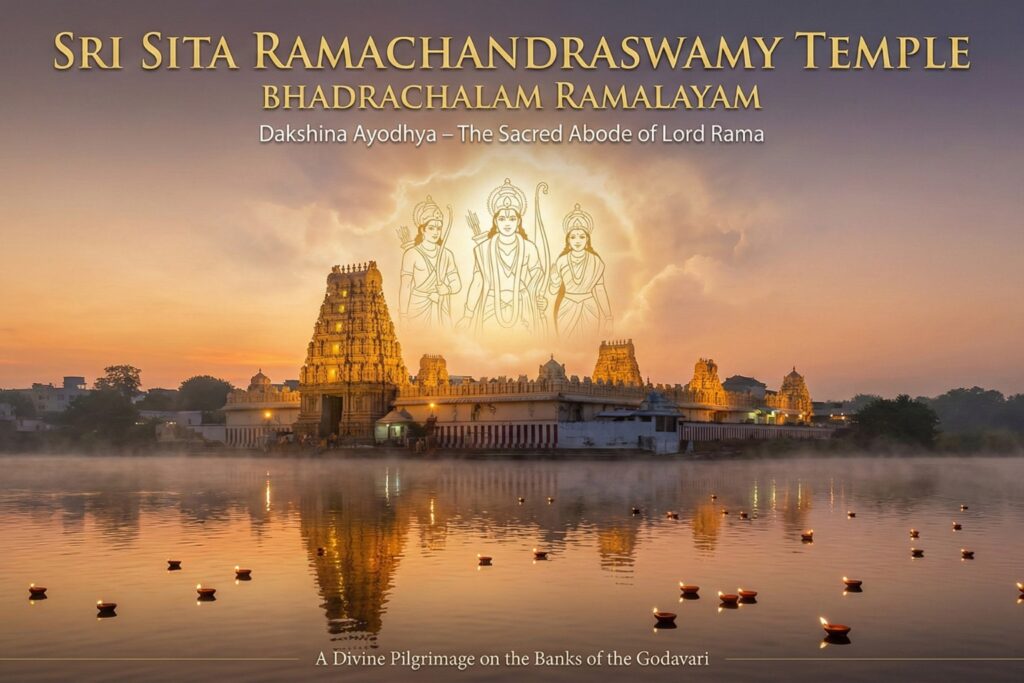
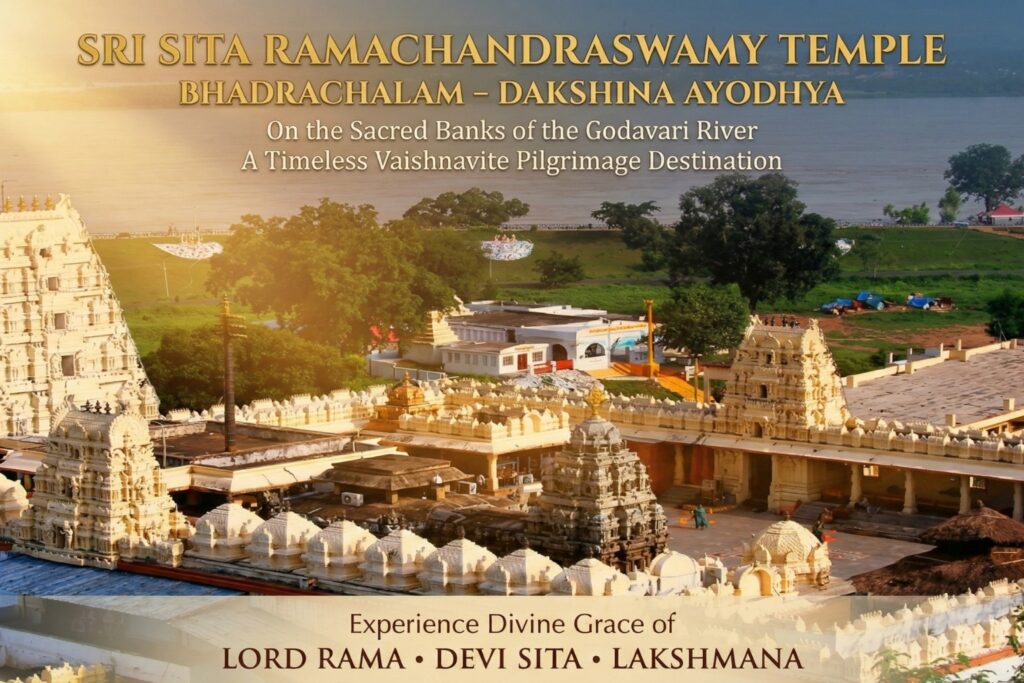
When planning a spiritual trip in Telangana, Sri Sita Ramachandraswamy Temple, popularly known as Bhadrachalam Temple, is one of the most searched pilgrimage destinations. Located on the banks of the Godavari River, this sacred temple attracts thousands of devotees every year.
If you are planning your Bhadrachalam Temple visit, here is everything you should know before you go from history and significance to travel routes, government arrangements, and practical tips.
About Bhadrachalam Temple
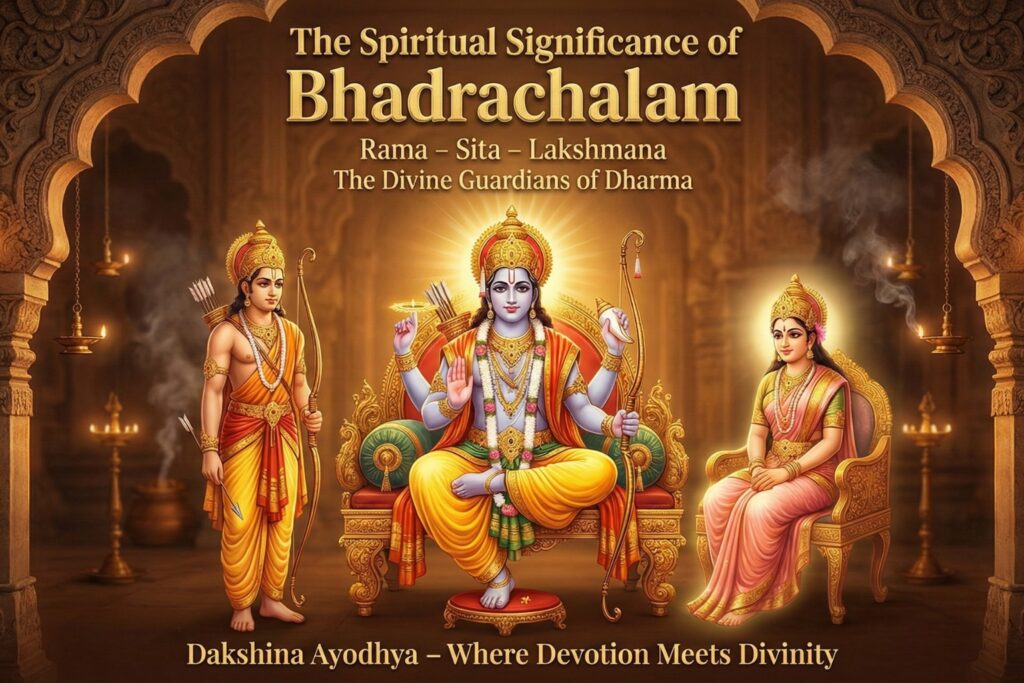
Bhadrachalam Temple is dedicated to Lord Rama, along with Devi Sita and Lakshmana, and is regarded as one of the most sacred Rama temples in South India. The temple holds immense importance among devotees because of its deep association with the Ramayana and the belief that this region forms part of the ancient Dandakaranya forest where Lord Rama spent years during his exile. Owing to this strong spiritual and mythological connection, Bhadrachalam is respectfully referred to as Dakshina Ayodhya, meaning the “Southern Ayodhya.”
One of the most remarkable aspects of Bhadrachalam Temple is its unique idol structure, which distinguishes it from many other Rama temples across India. Here, Lord Rama is depicted seated in Padmasana (lotus posture), symbolizing calmness, divine authority, and spiritual balance. Devi Sita is seated gracefully on His lap, representing unity, devotion, and inseparable companionship. Lakshmana stands beside them in a posture of service and protection, reflecting his unwavering loyalty and dedication.
This rare and powerful representation of the divine trio gives Bhadrachalam Temple a distinct spiritual identity. The iconography not only highlights family unity and dharma but also strengthens the emotional and devotional connection devotees feel when they visit the temple.
History of Bhadrachalam Temple
The history of Bhadrachalam Temple is profoundly intertwined with devotion, mythology, and unwavering faith. The origins of the temple trace back to ancient times and are closely connected to the Ramayana tradition, making it one of the most spiritually significant Rama temples in India.
According to legend, a devoted follower named Bhadra undertook intense penance on the serene banks of the Godavari River, praying for a divine vision of Lord Rama. Deeply moved by his devotion, Lord Rama is believed to have appeared before him and granted his blessing. Over time, the region came to be known as Bhadrachalam — meaning “the hill of Bhadra” — in honor of the devotee whose faith sanctified the land.
The present temple structure, however, dates back to the 17th century. It was constructed and expanded under the dedication of Kancherla Gopanna, widely known as Bhakta Ramadasu. Serving as a revenue officer under the Golconda Sultanate, he used his personal resources and administrative authority to rebuild and enhance the temple complex. Despite facing imprisonment for his actions, his devotion never wavered. His spiritual legacy and sacrifices played a crucial role in elevating Bhadrachalam Temple’s prominence, making it a major center of Rama worship in South India.
Spiritual Significance of Bhadrachalam Temple
Bhadrachalam Temple holds immense importance among Vaishnavite devotees. The temple’s location beside the sacred GodavThe sacred Godavari River greatly enhances the spiritual atmosphere of Bhadrachalam Temple. Flowing peacefully beside the temple town, the river is considered holy and spiritually purifying. Its presence adds a serene and devotional ambiance to the entire pilgrimage experience.
Before proceeding for darshan at Bhadrachalam Temple, many pilgrims take a ritual bath in the Godavari River. This holy dip is believed to cleanse the body and purify the mind, preparing devotees spiritually before they enter the temple premises to seek the blessings of Lord Rama.
Several major festivals are celebrated at Bhadrachalam Temple with grandeur and deep devotion. The most prominent among them is Sri Rama Navami, during which the celestial wedding ceremony of Lord Rama and Devi Sita (Sita Rama Kalyanam) is performed in the presence of thousands of devotees. Another significant occasion is Vaikuntha Ekadashi, an important festival in the Vaishnavite tradition that attracts large numbers of pilgrims. Additionally, Godavari Pushkaralu, held once every 12 years, draws massive crowds who gather to take a sacred dip in the river and participate in special temple rituals.
During these festival periods, Bhadrachalam Temple experiences heavy pilgrim gatherings, and the entire town transforms into a vibrant spiritual center filled with devotional chanting, cultural programs, and ceremonial processions..
Do’s and Don’ts for Bhadrachalam Temple Visit
✅ Do’s
Dress modestly for temple darshan
Carry valid ID proof
Start early to avoid traffic
Follow temple queue system
Stay hydrated during summer visits
❌ Don’ts
Avoid photography inside the sanctum
Do not litter near temple or river ghats
Avoid peak afternoon hours during summer
Do not carry restricted items inside
Government Arrangements at Bhadrachalam Temple
Due to high footfall, especially during festivals, structured facilities are provided by the Telangana Government and temple authorities.
Accommodation
Temple guest houses
Pilgrim dormitories
Telangana Tourism Haritha hotels
Crowd & Security Management
Organized darshan queues
Police deployment during peak seasons
CCTV monitoring
Public Amenities
Drinking water facilities
Clean restrooms
Designated parking zones
Medical and first-aid support during festivals
These arrangements help ensure a smoother Bhadrachalam Temple visit experience.
How to Reach Bhadrachalam Temple
By Road (Most Convenient)
Distance from Hyderabad: 310–325 km
Travel Time: 6–7 hours
Common Route: Hyderabad → Suryapet → Khammam → Bhadrachalam
Road travel is the most preferred option for families and group pilgrims.
By Air
Nearest airport: Rajiv Gandhi International Airport
From the airport, visitors must continue by road to reach Bhadrachalam Temple.
By Rail
Nearest railway stations:
Bhadrachalam Road (Kothagudem)
Khammam
From these stations, taxis or buses are required to reach the temple town.
Government and Private Travel Options
Government Transport
TSRTC buses from Hyderabad and major cities
Special festival buses during Sri Rama Navami
Private Vehicle Options
Many families prefer private vehicles for a more comfortable and flexible trip to Bhadrachalam Temple.
Private vehicles give you flexibility in darshan timing and make the journey more relaxed, especially during busy seasons.
Customer Testimonials
FAQs About Bhadrachalam Temple
1. What is the best time to visit Bhadrachalam Temple?
October to February is ideal due to pleasant weather. Sri Rama Navami is spiritually significant but crowded.
2. How long does darshan take?
On normal days, 30–60 minutes. During festivals, waiting time may increase.
3. Is online booking available?
Yes, darshan and seva tickets can be booked via the official temple website.
4. Is Bhadrachalam Temple suitable for senior citizens?
Yes, but visiting during non-peak days is recommended for comfort.
5. Can Bhadrachalam Temple be covered in one day?
It is possible, but a 2-day trip allows a relaxed and peaceful experience.
Conclusion
A visit to Bhadrachalam Temple is more than a pilgrimage it is a spiritually enriching journey set along the sacred Godavari River. With strong mythological roots, historical legacy, structured government facilities, and good road connectivity from Hyderabad, Bhadrachalam Temple continues to be one of Telangana’s most important devotional destinations.
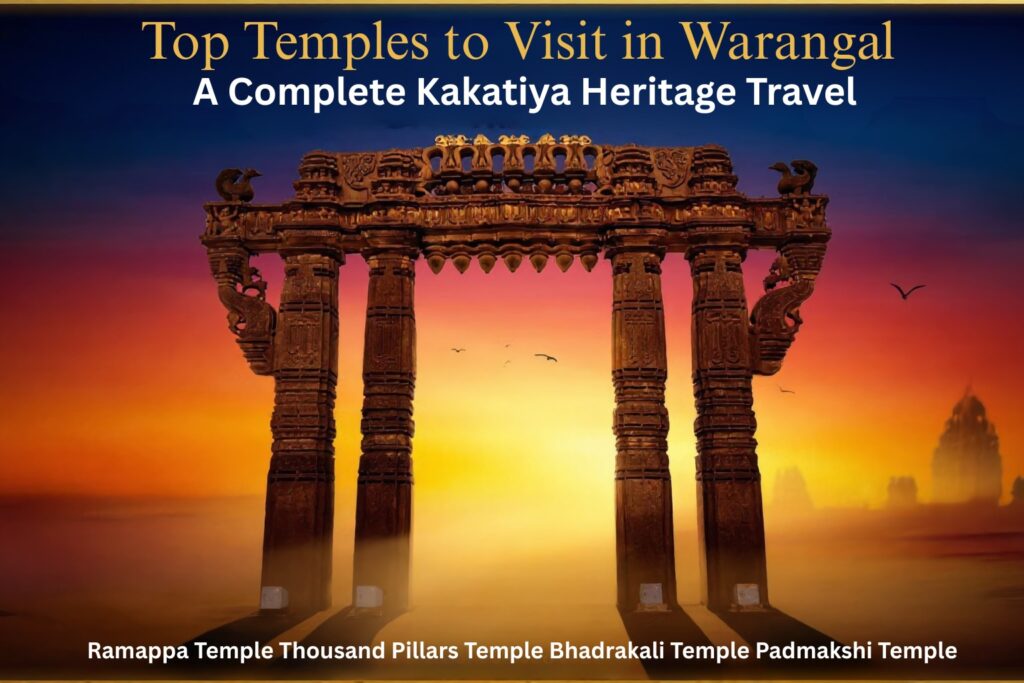
Explore the top temples to visit in Warangal including Ramappa Temple, Thousand Pillar Temple & Bhadrakali Temple. Complete heritage travel guide.
Whether you’re a pilgrim, history enthusiast, architecture lover, or weekend traveler from Hyderabad, Warangal’s temple circuit is a must-visit.
🏛️ Why Warangal is Famous for Temple Tourism
Warangal is celebrated for:
Kakatiya-era architecture (12th–13th century)
Intricate stone carvings and sculptures
UNESCO World Heritage recognition
Unique temple engineering techniques
Blend of Shaiva, Vaishnava, Shakti & Jain traditions
The temples here are not just places of worship — they are architectural marvels that reflect the golden era of the Kakatiya dynasty.
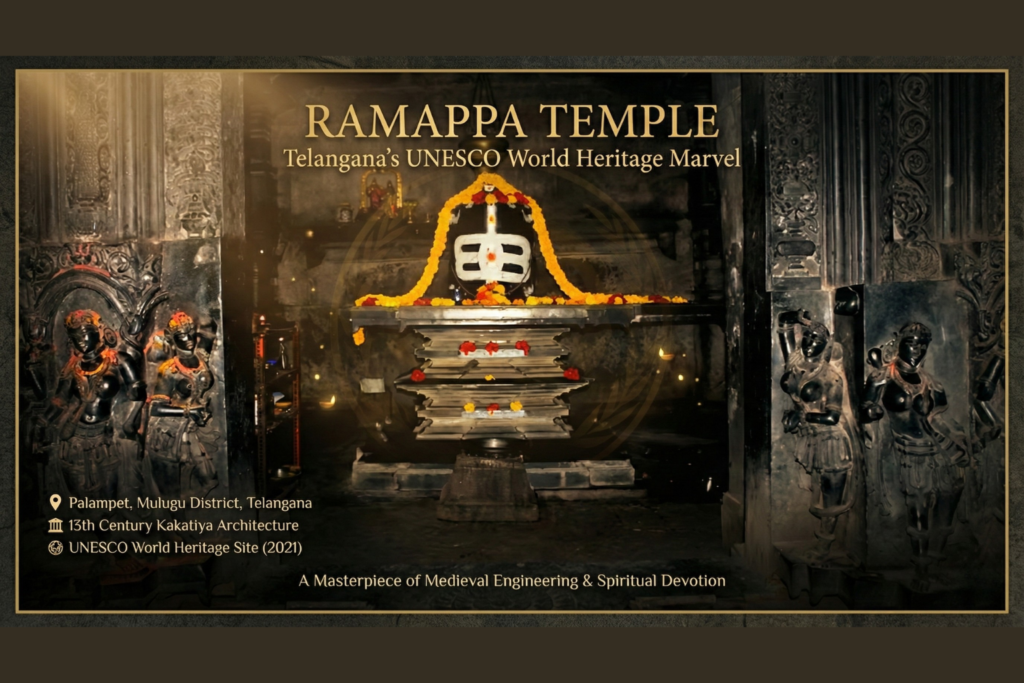
🛕 1. Ramappa Temple (Rudreshwara Temple) – UNESCO World Heritage Site
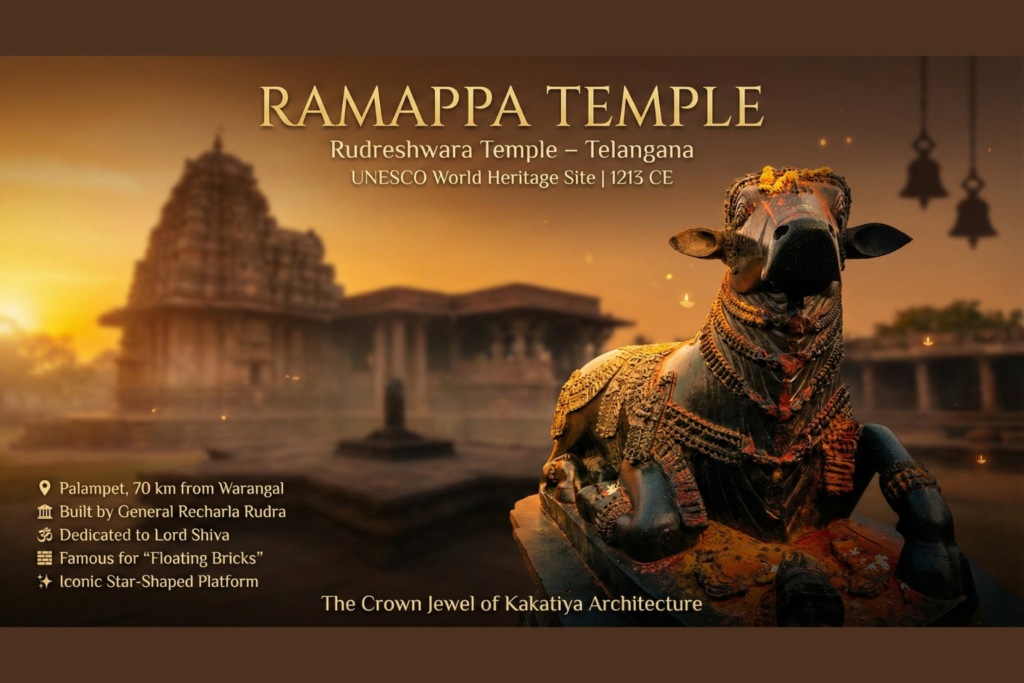
Located near Palampet village, about 70 km from Warangal city, Ramappa Temple is the crown jewel of Kakatiya architecture.
Why It Is Special:
Built in 1213 CE by General Recharla Rudra.
Dedicated to Lord Shiva.
Recognized as a UNESCO World Heritage Site.
Famous for its “floating bricks” used in construction.
Exquisite carvings of dancers, musicians, and mythological figures.
The temple stands on a star-shaped platform and features intricate sculptural panels that showcase extraordinary craftsmanship. The ceiling carvings and polished black basalt Nandi statue are particularly breathtaking.
This temple alone makes Warangal a global heritage destination.
🛕 Ramappa Temple (Rudreshwara Temple) – Telangana’s UNESCO Architectural Marvel
The Ramappa Temple, officially known as the Rudreshwara Temple, is one of India’s most extraordinary examples of medieval temple architecture and a UNESCO World Heritage Site. Nestled in the scenic village of Palampet in Mulugu district, Telangana, this temple is a striking testament to the artistic brilliance, engineering prowess, and spiritual devotion of the Kakatiya dynasty.
🌟 UNESCO World Heritage Recognition
In July 2021, the Ramappa Temple was inscribed on the UNESCO World Heritage List under the name Kakatiya Rudreshwara (Ramappa) Temple, Telangana. It is celebrated for its outstanding universal value, representing the peak of Kakatiya architectural and artistic achievement.
The UNESCO designation emphasizes the temple’s exquisite craftsmanship, remarkable engineering techniques, and cultural significance as a living monument of India’s rich heritage.
📜 History & Origins
The Ramappa Temple was constructed around 1213 CE during the reign of Ganapati Deva, one of the prominent rulers of the Kakatiya dynasty. The project was initiated by Recherla Rudra, a trusted general of the Kakatiya sovereign, under whose supervision the temple took shape.
What makes this temple especially unique is that it bears the name of its chief architect — Ramappa — rather than that of the deity it houses. This rare distinction reflects the extraordinary contribution of the sculptor Ramappa to its creation, and sets it apart among India’s vast number of historic temples.
Ancient texts and inscriptions reveal that the temple complex was built between 1212 and 1234 CE and originally comprised three shrines, with the main shrine dedicated to Lord Shiva (Ramalingeshwara Swamy).
🏛️ Architectural Brilliance
Ramappa Temple stands majestically on a 6-foot-high star-shaped platform, a design element that enhances both its aesthetic appeal and symbolic importance.
🔶 Key Architectural Features
Sandstone with Basalt Accents – The temple’s structure features reddish sandstone walls, while the outer columns display elaborate carvings on black basalt, a stone rich in iron and silica. These surfaces are adorned with a variety of motifs, including mythical animals, celestial dancers (Mandakinis), musicians, and floral designs, each carved with exquisite detail.
Floating Bricks & Sandbox Technique – One of the temple’s most fascinating features is its use of extremely lightweight bricks that can actually float on water. These were used in the construction of the roof superstructure (garbhalayam), and their buoyancy helped the structure withstand seismic activity over centuries. This technique — part of the sand-box foundation method — contributed significantly to the temple’s durability even through earthquakes and centuries of exposure.
Mandapa & Sculptural Space – The mandapa (hall) in front of the sanctum boasts intricately carved pillars placed so that they create a mesmerizing interplay of light and space, giving the interior an expansive and sacred feel.
Nandi and Shrine Layout – The temple complex includes two smaller Shiva shrines on either side of the main sanctuary. Facing the main sanctum is a massive Nandi statue, carved in black basalt and housed in its own pavilion, which draws devotees and art lovers alike.
🕉️ Religious Significance
Although Ramappa Temple is often admired for its architectural wonders, it is first and foremost a place of worship dedicated to Lord Shiva in the form of Ramalingeshwara Swamy. The temple has been, for centuries, a site of religious importance where devotees come to offer prayers, especially during Maha Shivaratri and other Shiva-related festivals.
For pilgrims, the temple is a living expression of faith where ancient ritual practices continue alongside its recognition as a cultural heritage site.
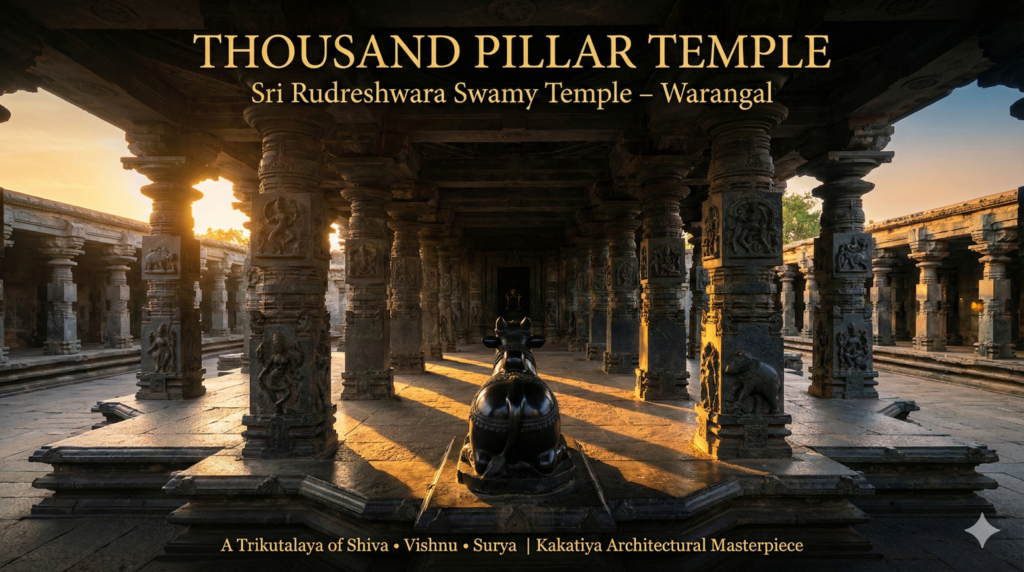
Located in Hanamkonda, this 12th-century temple was built by King Rudra Deva in 1163 CE.
Highlights:
Dedicated to Shiva, Vishnu, and Surya.
Built in the Trikutalaya style (three sanctums).
A massive hall supported by intricately carved pillars.
Stunning Nandi statue carved from a single stone.
Though called the Thousand Pillar Temple, it features numerous sculpted pillars arranged in such a way that none obstruct the view of the deity — a brilliant example of architectural planning.
Ramappa Temple (Rudreshwara Temple) – Telangana’s UNESCO Architectural Marvel
The Ramappa Temple, officially known as the Rudreshwara Temple, is one of India’s most extraordinary examples of medieval temple architecture and a UNESCO World Heritage Site. Nestled in the scenic village of Palampet in Mulugu district, Telangana, this temple is a striking testament to the artistic brilliance, engineering prowess, and spiritual devotion of the Kakatiya dynasty..
🛕 Thousand Pillar Temple – A Marvel of Kakatiya Architecture
The Thousand Pillar Temple, officially known as Sri Rudreshwara Swamy Temple, is one of India’s most iconic medieval temples and a cornerstone of Kakatiya architectural heritage. Located in Hanamkonda, in the twin city region of Warangal, Telangana, this 12th-century temple is celebrated for its unique design, finely carved pillars, and rich mythological significance. It stands as one of the major attractions on the Warangal temple trail, alongside Ramappa Temple, Bhadrakali Temple, and Padmakshi Temple.
📜 Historical Legacy
The Thousand Pillar Temple was constructed during the reign of King Rudra Deva of the Kakatiya dynasty around 1163 CE. This was a period of flourishing art, temple building, and regional stability under the Kakatiya rulers, who established Warangal as a cultural and political center in South India.
The temple was envisioned as a syncretic space of worship — honoring three principal deities. Its design reflects not only religious devotion but also the engineering ingenuity and artistic richness of the period.
🏛️ Temple Layout & Religious Importance
🔱 Trikutalaya (Three-Shrine Structure)
The Thousand Pillar Temple is a Trikutalaya, meaning it contains three sanctums, each dedicated to a distinct deity:
Shiva — as Rudreshwara Swamy
Vishnu
Surya — the Sun God
This unique threefold design makes it rare among Indian temples and showcases a spirit of religious harmony.
🔹 Central Hall & Pillars
The defining feature of the temple is its pillared hall, with each pillar elaborately carved to create an expansive and visually stunning interior. Although the name suggests “one thousand pillars,” the temple actually contains numerous intricately carved pillars that form an architectural labyrinth of light, shadow, and sculptural detail.
The placement and carvings of the pillars are so exquisitely crafted that they create unobstructed views toward the sanctums, demonstrating both technical skill and aesthetic vision.
🔹 Sculpted Legends
The temple walls and pillars are carved with depictions of divine figures, floral motifs, mythical beings, and geometric patterns — all showcasing the high level of craftsmanship characteristic of the Kakatiya era.
🏗️ Architectural Significance
The Thousand Pillar Temple is not just a religious site — it is an architectural masterpiece:
🔸 Star-Shaped Platforms
The temple structures are built on star-shaped platforms, a signature design seen in Kakatiya architecture that adds both visual complexity and symbolic resonance.
🔸 Intricate Stone Carvings
Each pillar is a work of art. Some illustrate dancers, musicians, gods and goddesses, and scenes from mythology. The level of detail is exceptional, especially considering the temple was sculpted in a time before modern tools.
🔸 Three Sancta Orientation
The orientation toward Shiva, Vishnu, and Surya demonstrates a broad religious embrace, blending Shaivism, Vaishnavism, and Surya worship within one sacred space.
These design elements show that the Thousand Pillar Temple was not only a place of worship but also a testament to spatial planning, devotional inclusivity, and sculptural brilliance.
🛐 Spiritual & Religious Importance
The temple attracts devotees from across India, especially during festivals such as:
Mahashivaratri
Vaisakha Poornima
Ekadashi days
Surya worship festivals
Devotees visit to seek blessings from multiple deities in a single sacred location — a feature that makes this temple spiritually inclusive and architecturally unique.
This temple is one of the most visited pilgrimage sites in Telangana.
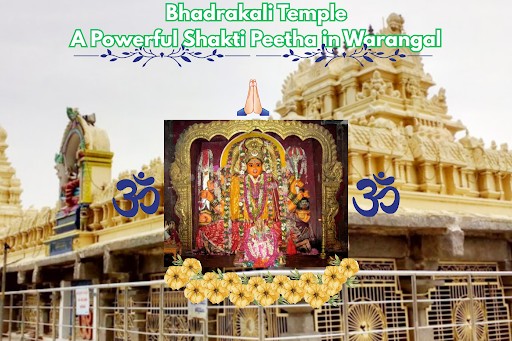
🛕 3. Bhadrakali Temple – Divine Power by the Lake
What Makes It Unique:
An ancient temple dating back to the Chalukya period.
Massive stone idol of Bhadrakali.
Scenic location beside Bhadrakali Lake.
Popular during festivals like Dasara and Navratri.
The peaceful lakeside setting makes it a perfect blend of devotion and natural beauty. Early morning and sunset visits offer stunning views.
Bhadrakali Temple, Warangal
A Powerful Shakti Peetha Overlooking a Serene Lake
Overview
The Bhadrakali Temple is one of the most revered and ancient temples in Warangal, dedicated to Goddess Bhadrakali, a fierce and protective form of Goddess Parvati. Situated on a hillock between Warangal and Hanamkonda, the temple overlooks the scenic Bhadrakali Lake, offering a breathtaking combination of spirituality and natural beauty.
This temple is not just a place of worship — it is an important spiritual landmark deeply connected with the region’s early dynasties and religious history.
Historical Background
The Bhadrakali Temple is believed to have been originally built in 625 CE by the Chalukya dynasty, making it one of the oldest temples in Telangana. Later, it was expanded and patronized by the Kakatiya rulers, who greatly contributed to temple architecture in Warangal.
Architectural Features
The temple reflects a blend of Chalukyan and Kakatiya architectural styles.
🔹 Main Deity
The presiding deity, Goddess Bhadrakali, is represented by a massive stone idol seated in a fierce yet protective posture. The idol is adorned with weapons symbolizing divine power and protection.
🔹 Temple Structure
Simple yet powerful stone architecture
A large courtyard accommodating devotees during festivals
Traditional Dravidian temple design elements
Scenic lake backdrop enhancing spiritual ambiance
Unlike some intricately carved Kakatiya temples, Bhadrakali Temple’s strength lies in its raw spiritual presence and hilltop setting.
Spiritual Significance
Bhadrakali Temple is considered one of the most powerful Shakti temples in Telangana. Devotees visit to seek:
Protection from negativity
Strength and courage
Relief from obstacles
Blessings for prosperity
During Navaratri, the temple attracts thousands of devotees from across Telangana
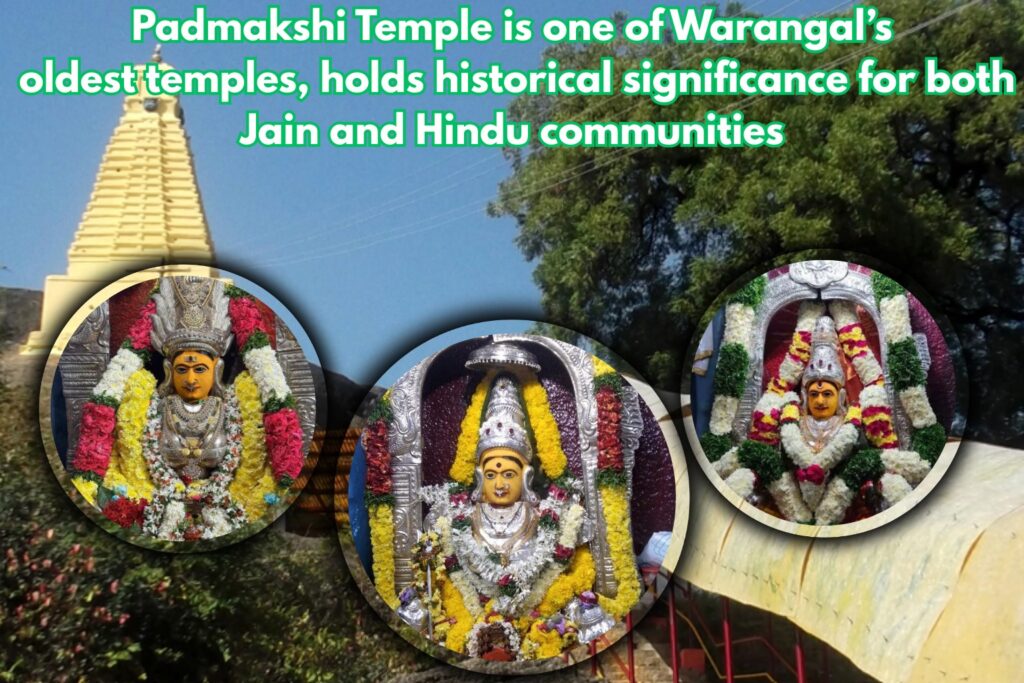
🛕 4. Padmakshi Temple – Jain & Hindu Heritage
Key Features:
Black granite pillar with four faces.
Sculptures of Jain Tirthankaras.
Located on a hill offering panoramic views.
It showcases Warangal’s diverse religious history and cultural inclusivity.
🛕 Padmakshi Temple, Warangal
A Rare Jain–Hindu Heritage Site
Overview
The Padmakshi Temple, located in Hanamkonda, is a historically significant temple that showcases a rare blend of Jain and Hindu religious traditions. The temple is dedicated to Goddess Padmakshi, believed to be an incarnation of Goddess Lakshmi.
This temple stands as a testimony to Warangal’s religious diversity and architectural evolution.
Historical Background
Padmakshi Temple dates back to the 12th century and is believed to have Jain origins before being converted into a Hindu temple during the Kakatiya rule.
Architectural Highlights
🔹 Jain Influence
The temple complex includes:
A black granite pillar with four faces (often associated with Jain iconography)
Carvings of Jain Tirthankaras
Minimalistic stone carvings compared to other Kakatiya temples
🔹 Hindu Elements
Over time, the temple evolved into a Hindu shrine dedicated to Goddess Padmakshi. Devotees worship the goddess for prosperity and well-being.
🔹 Elevated Location
The temple sits on a small hill, providing:
Elevated panoramic views of Hanamkonda
Peaceful surroundings
A calm and less crowded spiritual experience
Spiritual Significance
Padmakshi Temple is particularly visited by devotees seeking:
Wealth and prosperity
Family well-being
Spiritual clarity
Although smaller in scale compared to Bhadrakali and Ramappa temples, Padmakshi Temple holds immense cultural and historical value.
🏰 5. Warangal Fort – Kakatiya Grandeur
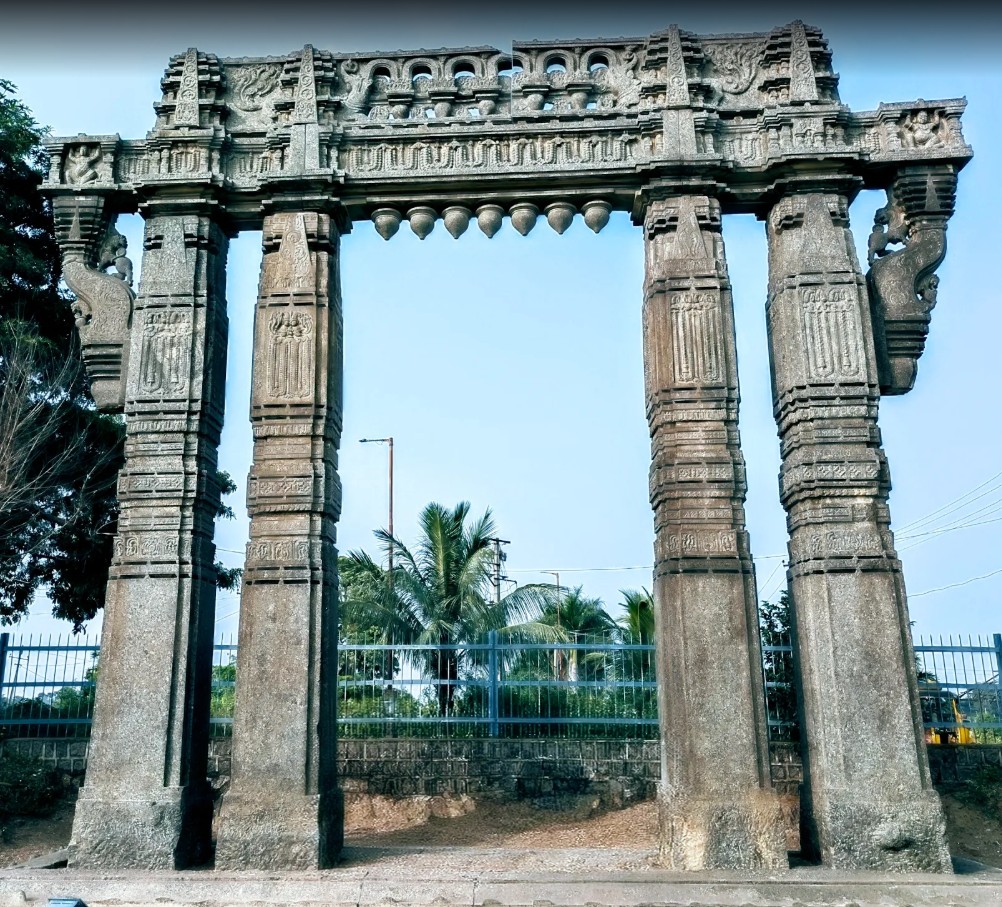
Though technically a fort, Warangal Fort contains temple ruins and majestic gateways known as “Kakatiya Kala Thoranam.”
Highlights:
Massive stone gateways.
Ruins of ancient temples.
Intricate stone sculptures.
Symbol of Telangana state heritage.
The fort complex reflects the power and artistic excellence of the Kakatiya rulers.
🏛️ Architectural Significance of Warangal Temples
Warangal temples are known for:
Star-shaped platforms
Sandstone and black basalt sculptures
Intricate pillar carvings
Advanced temple engineering
Earthquake-resistant construction
The Kakatiya artisans achieved unmatched detail in stone work, making these temples architectural masterpieces.
🚘 YoDrives Travel Options for Warangal Temple Trip
YoDrives offers flexible and comfortable ground transportation solutions tailored for pilgrimage journeys.
🚗 Self-Drive Cars 🚘 Chauffeur-Driven Cars 🚌 Tempo Travellers (10–26 Seaters) 🚌 Mini Buses & Buses (Up to 50 Seaters) 🚙 Luxury Car Rentals
❓ FAQs – Warangal Temple Trip with YoDrives
1. How far is Warangal from Hyderabad?
Warangal is approximately 150 km from Hyderabad, and the journey takes around 3 to 4 hours by road, depending on traffic and route conditions.
2. What is the best way to travel from Hyderabad to Warangal temples?
The most convenient way is by road travel, as it allows flexibility to visit multiple temples like Ramappa Temple, Thousand Pillar Temple, Bhadrakali Temple, and Padmakshi Temple in a single trip. YoDrives offers self drive cars, chauffeur-driven vehicles, tempo travellers, and buses for comfortable temple travel.
3. Can I visit all major Warangal temples in one day?
While it is possible to visit Thousand Pillar Temple, Bhadrakali Temple, and Warangal Fort in one day, Ramappa Temple is located about 70 km away from Warangal city and is better covered in a 2-day itinerary for a relaxed experience.
4. Does YoDrives provide self-drive cars for Warangal temple trips?
Yes. YoDrives provides self-drive car rentals, allowing families and small groups to travel with complete schedule flexibility and privacy.
5. Are chauffeur driven cars available for temple visits in Warangal?
Yes. YoDrives offers chauffeur driven vehicles, which are ideal for senior citizens and devotees who prefer a relaxed, stress-free pilgrimage journey.
6. Is a tempo traveller available for group temple tours in Warangal?
Yes. YoDrives provides 10–26-seater tempo travellers, perfect for extended families, bhajan groups, and community darshan trips to Warangal temples.
7. Can large pilgrimage groups book buses for Warangal temple tours?
Yes. YoDrives offers mini buses and full-size buses (up to 50-seaters), suitable for large pilgrimage groups and temple tour organizers.
8. What is the best time to visit Warangal temples?
The ideal time to visit Warangal temples is between October and February, when the weather is pleasant. Early mornings are best for peaceful darshan and photography.
9. Is Ramappa Temple a UNESCO World Heritage Site?
Yes. Ramappa Temple (Rudreshwara Temple) was declared a UNESCO World Heritage Site in 2021 for its exceptional Kakatiya architecture and floating brick construction.
10. Can I plan a weekend temple trip from Hyderabad to Warangal?
Yes. Warangal is an ideal weekend spiritual getaway from Hyderabad. With YoDrives, you can choose flexible rental durations for same-day return or 2-day temple trips.
🏁 Conclusion
A trip to temples in Warangal is a journey into Telangana’s glorious past. From the world-renowned Ramappa Temple to the majestic Thousand Pillar Temple and the serene Bhadrakali Temple, every monument tells a story of devotion, power, and artistic brilliance.
Whether you are seeking spiritual peace, architectural inspiration, or a meaningful weekend escape from Hyderabad, Warangal’s temple circuit offers a complete cultural and devotional experience.
Warangal stands as a timeless testament to the legacy of the Kakatiya dynasty — a destination every traveler must explore at least once.
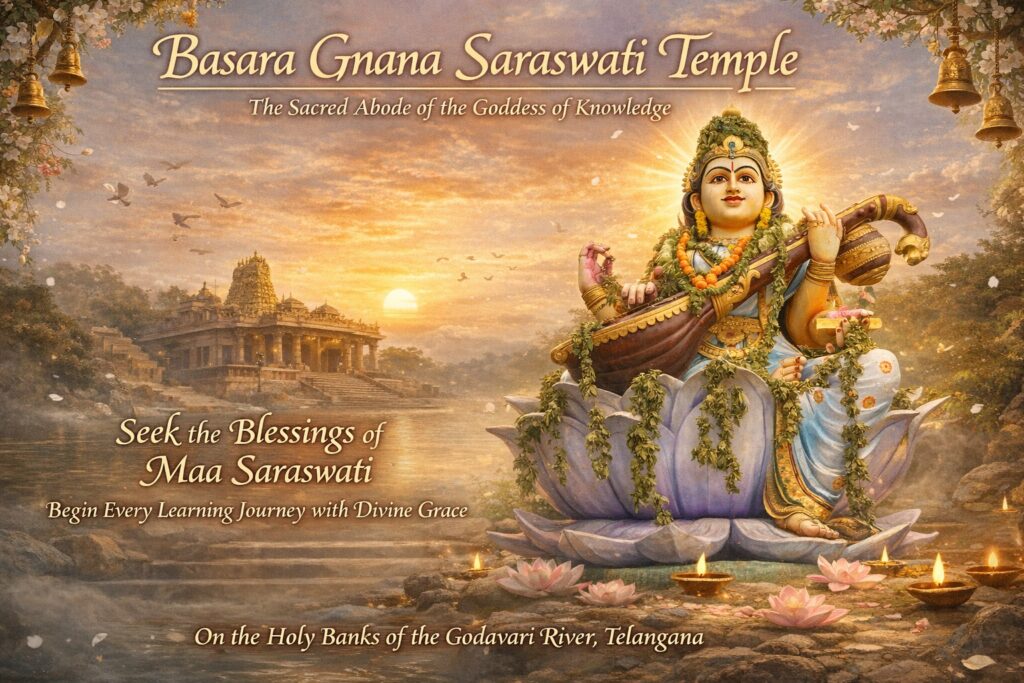
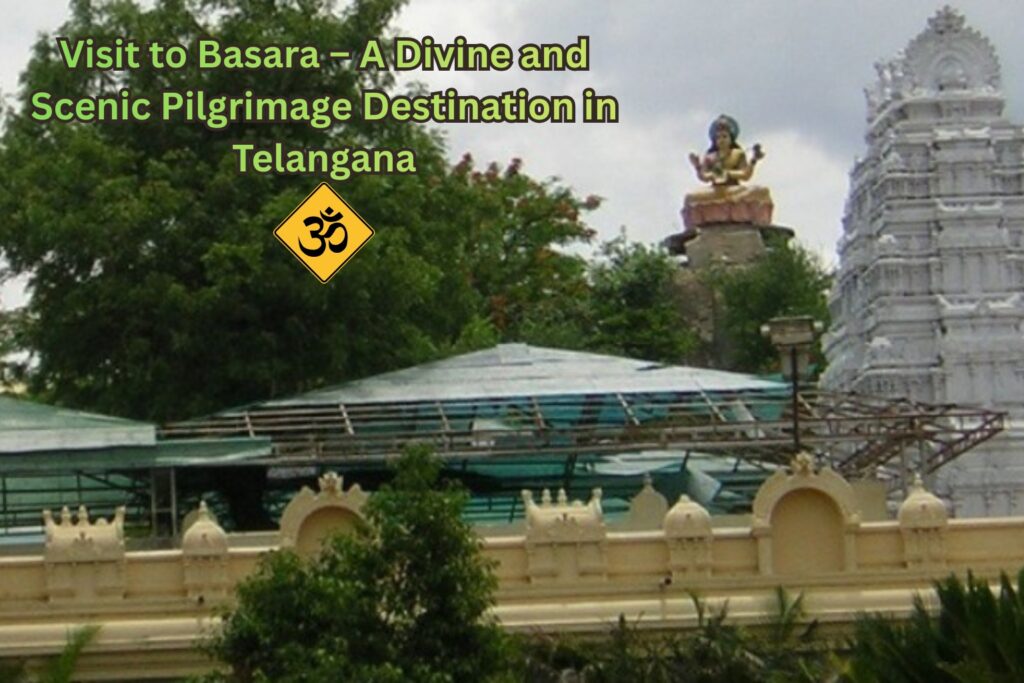
Basara Saraswati Temple, officially known as the Gnana Saraswati Temple Basara, is one of the most sacred pilgrimage destinations in Telangana.Nestled on the banks of the sacred Godavari River in the Nirmal district of Telangana, Basara is especially famous as the abode of Goddess Saraswati, the goddess of wisdom, learning, and knowledge. The town attracts thousands of devotees, families, and tourists every year who seek blessings, peace, and a break from city life.
Whether you are planning a spiritual visit, a family pilgrimage, or a peaceful weekend getaway, Basara offers a beautiful combination of devotion, history, nature, and cultural heritage.
📍 Location and How Basara is Situated
Basara is located in northern Telangana, approximately:
210 km from Hyderabad
70 km from Nizamabad
Close to the Maharashtra border
The town lies beside the majestic Godavari River, adding to its spiritual and scenic charm. The riverbanks provide a calm and refreshing atmosphere that enhances the pilgrimage experience.
Basara’s location makes it an ideal road trip destination from Hyderabad, with good highway connectivity and scenic countryside views along the way.
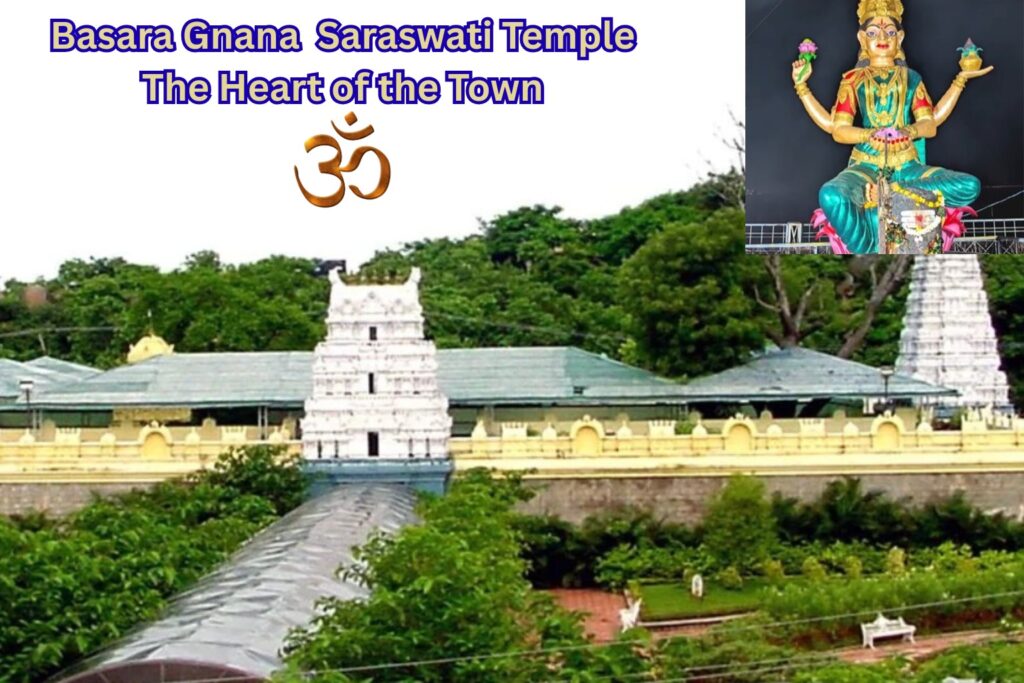
🛕 Basara Saraswati Temple – The Heart of the Town
The Sri Gnana Saraswati Devi Temple is the one of the main attractions in Basara and one of the very few temples in India dedicated to Goddess Saraswati. It is especially popular among families bringing young children for the sacred Aksharabhyasam ceremony — a ritual that marks the beginning of a child’s education in Hindus.
Spiritual Significance
According to legend, Basara Saraswati Temple is closely associated with Sage Vyasa, who, along with his disciples, is believed to have settled in this sacred region after the Mahabharata war. It is said that Sage Vyasa performed deep penance here and installed the idols of Goddess Saraswati, Goddess Lakshmi, and Goddess Kali, which continue to be worshipped at the temple even today.
At Basara Saraswati Temple, the sacred Aksharabhyasam ceremony marking the beginning of a child’s educational journey is conducted daily from 7:30 AM to 12:30 PM and again from 2:00 PM to 6:00 PM. The normal Aksharabhyasam ticket is priced at ₹100, while the special Akshara Sreekaram ticket costs ₹1,000.
The temple represents:
Knowledge (Saraswati)
Wealth (Lakshmi)
Power (Kali)
Devotees believe that prayers offered here help children excel in education and bring clarity of mind.
🧭 Why Basara is a Perfect Spiritual Getaway
Basara Saraswati Temple offers a rare and meaningful combination of divine spirituality, riverbank tranquility along the Godavari, ancient legends associated with Sage Vyasa, a family-friendly pilgrimage atmosphere, and the peaceful charm of rural Telangana. ✨ A unique Saraswati temple ✨ Riverbank tranquility ✨ Historical legends ✨ Family-friendly pilgrimage ✨ Peaceful village atmosphere
It is an ideal destination for:
Families starting a child’s educational journey
Devotees seeking blessings of knowledge and wisdom
Travelers looking for a calm spiritual break from city life
🏞️ Places to Visit in Basara Saraswati Temple Surroundings
While the temple is the main spiritual centre, Basara and its surroundings offer several peaceful and interesting spots to explore.
🌊 1. Godavari River Ghats
The riverbank near the temple is a serene place where devotees take a holy dip before darshan. Early mornings here are especially calm, with misty views and temple bells echoing in the background.
🪔 2. Vyasa Temple
Located near the Saraswati temple, this shrine is dedicated to Sage Vyasa. It holds historical and spiritual importance, as the sage is believed to have meditated here.
🏞️ 3. Basara Hills and Nature Walks
The surrounding hills offer quiet walking paths and viewpoints, ideal for those who enjoy nature and photography.
🌅 4. Basara River View Points
Evening views of the sunset over the Godavari create a peaceful atmosphere perfect for reflection and relaxation.
🛕 5. Nearby Temples and Shrines
Small temples and shrines in the area allow devotees to extend their spiritual exploration beyond the main temple.
Basara is not just a pilgrimage spot — it is also a place to slow down, enjoy nature, and experience rural Telangana’s charm.
🏨 Accommodation in Basara Saraswati Temple Area
Since Basara Saraswati Temple is a major pilgrimage destination, the town offers a good mix of government run and private accommodation options to suit the needs of devotees, families, and group travelers.
🏛 Government Accommodation
Temple authorities and Telangana tourism departments offer:
Private accommodations near Basara Saraswati Temple include budget lodges, family rooms with basic amenities, AC and non AC options, and small hotels that also offer food and parking facilities.
Budget lodges near the temple area
Family rooms with basic amenities
AC and non-AC options
Small hotels offering food and parking
During festival seasons, advance booking is recommended.
🚗 Best Time to Visit Basara
Basara Saraswati Temple can be visited throughout the year, but the best time is:
October to February – Pleasant weather, ideal for temple visits and outdoor walks
Vasant Panchami – Major festival dedicated to Goddess Saraswati
Dasara & Navaratri – Special celebrations with large crowds
Summer months can be hot, but early morning temple visits remain comfortable.
🚘 Travel Planning – Road Trip to Basara
A road trip from Hyderabad to Basara takes approximately 4–5 hours depending on traffic and stops. Many families prefer private vehicles for comfort, especially when traveling with children for Aksharabhyasam ceremonies.
Traveling by car allows:
Flexible darshan timing
Comfortable breaks
Scenic rural views
Carrying pooja items and luggage easily
For group pilgrimages, tempo travellers or mini buses are convenient.
🏛 Government Accommodation & Arrangements at Basara
The government arrangements at Basara Saraswati Temple are primarily managed by the Telangana State Endowments Department, which oversees the administration and development of the Sri Gnana Saraswati Devasthanam. With Basara being one of the most important Saraswati temples in India, special attention is given to pilgrim facilities, especially during peak occasions such as Vasant Panchami, Navaratri, and school reopening seasons when Aksharabhyasam ceremonies increase significantly.
A ₹200 crore master plan is currently under preparation to transform Basara into a well-planned spiritual tourism destination with improved infrastructure, better pilgrim flow management, and enhanced amenities.
🛕 Temple Administration & Festival Management
The temple operations are supervised by a dedicated Executive Officer under the Endowments Department. During major festivals like Vasant Panchami (celebrated annually with lakhs of devotees), special officers and additional administrative staff are appointed to ensure smooth darshan, crowd control, and service delivery.
This structured governance ensures that pilgrims receive organized facilities even during high-rush periods.
🛏 Government-Managed Devotee Accommodation
The Basara Saraswati Temple administration provides affordable and convenient accommodation options close to the shrine on a first-come-first-served basis (currently no online booking system).
🏨 Temple Guest Houses & Cottages
TTD Guest House – A large facility with around 100 rooms, suitable for families and groups. (Contact @ 090456 45673)
Other temple-managed rooms range between ₹800–₹1000, offering budget-friendly stays for pilgrims.
These options are ideal for devotees who wish to stay close to the temple premises for early morning darshan or Aksharabhyasam ceremonies.
🌿 Telangana Tourism Accommodation
The Haritha Hotel Basara, managed by Telangana Tourism, is another popular government-supported stay option.
AC Rooms: Approximately ₹1300–₹1450
Non-AC Rooms: ₹750–₹950
Haritha Hotel is known for its clean environment, family-friendly rooms, and convenient location, making it one of the best government-backed lodging options near the temple.
🚨 Security & Safety Arrangements
To ensure pilgrim safety, especially during festival rush:
CCTV Surveillance: Temple premises and the Godavari Pushkara Ghat are monitored through cameras.
Emergency Services: The district administration deploys police personnel, fire engines, medical camps, and trained swimmers during peak crowds.
These arrangements help maintain order, safety, and emergency readiness.
🚰 Public Amenities & Infrastructure
The government ensures that essential pilgrim facilities are available:
Temporary Queue Lines: Waterproof barricades and organized queue systems during festivals.
Drinking Water Facilities across the temple complex.
Bio-Toilets and Sanitation Units for pilgrims.
Changing Rooms for devotees taking a holy dip in the Godavari River.
Parking Areas for private vehicles and buses.
These amenities are designed to make Basara a comfortable and hygienic pilgrimage center.
🚉 Railway Station Upgrades
The Basar Railway Station (BASAR) has been upgraded to handle increased pilgrim traffic:
Certified under ISO 14001:2015 environmental standards
24/7 contracted cleaning services
Segregated waste management with green and blue bins
This ensures a clean and eco-friendly travel experience for visitors arriving by train.
🏗 Recent Government Initiatives (2025–2026)
The Telangana Government has announced a ₹200 crore master development plan for Basara, focusing on:
✔ Modernizing temple infrastructure while preserving heritage ✔ Use of natural stone architecture for future temple structures ✔ Improved entry, exit, and parking management systems ✔ Ensuring 24/7 clean drinking water supply ✔ Better organization of annadanam (free food distribution) ✔ Expanded facilities to handle growing pilgrim numbers
These initiatives aim to transform Basara into a model spiritual tourism destination in Telangana.
🌼 Summary
Government arrangements at Basara Saraswati Temple are steadily evolving to provide:
✔ Affordable accommodation ✔ Organized darshan systems ✔ Clean and safe infrastructure ✔ Improved transport connectivity ✔ Large-scale future development plans
This makes Basara Saraswati Temple not only a sacred destination but also a well supported pilgrimage center for families, students, and devotees from across India.
Essential Information for Basara Saraswati Temple:
Timing
Activity in the Temple
4:00 AM
Temple opens
4:00 AM to 4:30 AM
Puja startsGet tickets for Abhishekham
4:30 AM to 7:30 AM
Abhishekam, Alankarana, Harathi, Prasadam
7:30 AM to 12:00 Noon
Archana and Sarva Darshan, Aksharabhyas.The Aksharabhyasam happens during this time.
12:00 to 12:13 PM
Nivedana and Harathi
12:30 PM to 2:00 PM
Temple remains closed
2:00 PM to 6:30 PM
Archana and Sarva Darshan, Aksharabhyas.The Aksharabhyasam happens during this time
6:30 PM to 7:00 PM
Devasthanam Pradosha Pooja
7:00 PM to 8:30 PM
Maha Harathi and Darshanam
08:30 PM
Temple closes for the day
🚗 How to Reach Basara Saraswati Temple
The Basara Gnana Saraswati Temple in Telangana is well-connected by air, rail, and road, making it easily accessible for devotees and tourists from different parts of India.
✈️ By Air
The nearest airport to Basara is Rajiv Gandhi International Airport (HYD), Hyderabad, located about 210 km away. From the airport, visitors can hire a taxi, cab, or rental car to reach Basara comfortably. The road journey from Hyderabad to Basara Saraswati Temple takes approximately 4 to 5 hours, offering a scenic drive through rural Telangana landscapes.
🚆 By Train
Basara has its own railway station called Basar Railway Station (BSX), located very close to the temple. Several passenger and express trains connect Basar to major cities like Hyderabad, Nizamabad, and Secunderabad. From the station, the temple can be reached within a few minutes by auto-rickshaw or taxi, making train travel one of the most convenient options for pilgrims.
🛣️ By Road
Basara is well-connected by highways and state roads to major cities such as Hyderabad, Nizamabad, Nagpur, and Mumbai. Regular TSRTC buses operate from Hyderabad and nearby towns to Basara. Devotees can also travel by private car, taxi, or group vehicles, which offer flexibility in travel timing and comfort—especially useful for families visiting the temple for Aksharabhyasam ceremonies.
Testimonials
❓ Frequently Asked Questions
1️⃣ Where is Basara Temple located?
Basara Gnana Saraswati Temple is located in Basara town, Nirmal district, Telangana, on the banks of the Godavari River. It is about 210 km from Hyderabad.
2️⃣ Why is Basara Saraswati Temple famous?
Basara Temple is famous for being one of the few temples in India dedicated to Goddess Saraswati, the goddess of knowledge and learning. It is especially known for the Aksharabhyasam ceremony, where children begin their educational journey.
3️⃣ What is Aksharabhyasam at Basara?
Aksharabhyasam is a sacred ritual performed for children to mark the start of formal education. Parents bring their children to Basara Temple to seek blessings of Goddess Saraswati for wisdom and academic success.
4️⃣ What are the temple timings at Basara?
Basara Saraswati Temple usually opens early in the morning and remains open until evening. Timings may vary on festival days, so it is advisable to check locally before planning your visit.
5️⃣ Which are the main festivals celebrated at Basara Temple?
The most important festivals include Vasant Panchami, Navaratri, and Dasara, when thousands of devotees visit the temple for special poojas and rituals.
6️⃣ How can I reach Basara Temple from Hyderabad?
Basara can be reached by road (4–5 hours drive), train (Basar Railway Station), or air (Hyderabad Airport + road travel). Road trips are popular due to flexibility and comfort.
7️⃣ Are there accommodation facilities near Basara Saraswati Temple?
Yes, both government guest houses and private lodges are available near the temple. Telangana Tourism’s Haritha Hotel and temple-managed guest houses are popular options.
8️⃣ Is parking available at Basara Saraswati Temple?
Yes, designated parking areas are available for cars, buses, and other vehicles near the temple premises.
9️⃣ Is there a dress code for Basara Saraswati Temple?
While there is no strict dress code, devotees are encouraged to wear traditional and modest clothing when visiting the temple.
🔟 Can devotees take a holy dip in the Godavari River?
Yes, pilgrims often take a holy dip in the Godavari River ghats near the temple before darshan. Facilities such as changing rooms are available during peak seasons.
1️⃣1️⃣ What is the best time to visit Basara Saraswati Temple?
The best time to visit is between October and February, when the weather is pleasant. Festival seasons like Vasant Panchami attract large crowds.
⏰ Suggested Travel Plans (Hyderabad → Basara)
Here are sample itineraries based on common pilgrimage preferences:
📌 Travel Tips for Basara Temple
✔ Start early in the morning to avoid highway crowds ✔ Book your YoDrives vehicle well in advance, especially during festivals like Vasant Panchami ✔ Keep temple-appropriate attire ready for darshan ✔ Carry water and snacks for the road ✔ Plan breaks at designated highway stops
🧠 Why YoDrives is Highly Recommended for Your Basara Trip
YoDrives combines flexibility, comfort, variety, and safety all essential elements for a spiritual road journey. Whether you want to enjoy the drive in a self drive car, relax in a chauffeur-driven sedan, or travel with your entire group in a tempo or bus, YoDrives has a tailored solution.
Benefits of choosing YoDrives:
🚗 Self-Drive Cars – Ideal for families and small groups who want full control of their travel plan.
🚘 Chauffeur-Driven Cars – Perfect for devotees who prefer a relaxed, stress-free journey.
🚌 Tempo Travellers – Great for medium-sized groups (10–26 people) going together for rituals or group darshan.
🚌 Mini Buses & Buses – Best for large pilgrim groups, community travel, or temple tours.
🚙 Luxury Car Rentals – Comfortable travel experience with premium features.
📍 Doorstep Pickup & Drop – Start your journey conveniently from your Hyderabad home or hote
🌼 Conclusion
A visit to Basara is more than a temple trip it is a spiritual and emotional journey. The blessings of Goddess Saraswati, the peaceful flow of the Godavari River, and the sacred history of Sage Vyasa together create an atmosphere of purity and calm.
Whether you are traveling for devotion, tradition, or relaxation, Basara welcomes every visitor with divine grace and natural beauty. Plan your trip, start early, and experience the serenity of one of Telangana’s most beloved pilgrimage towns.
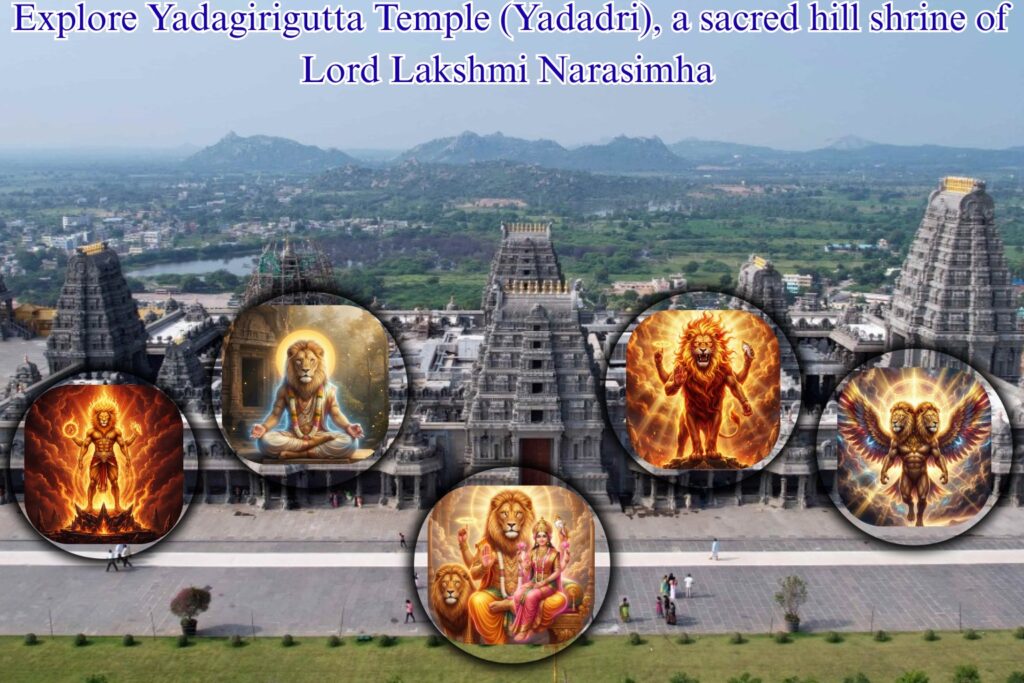
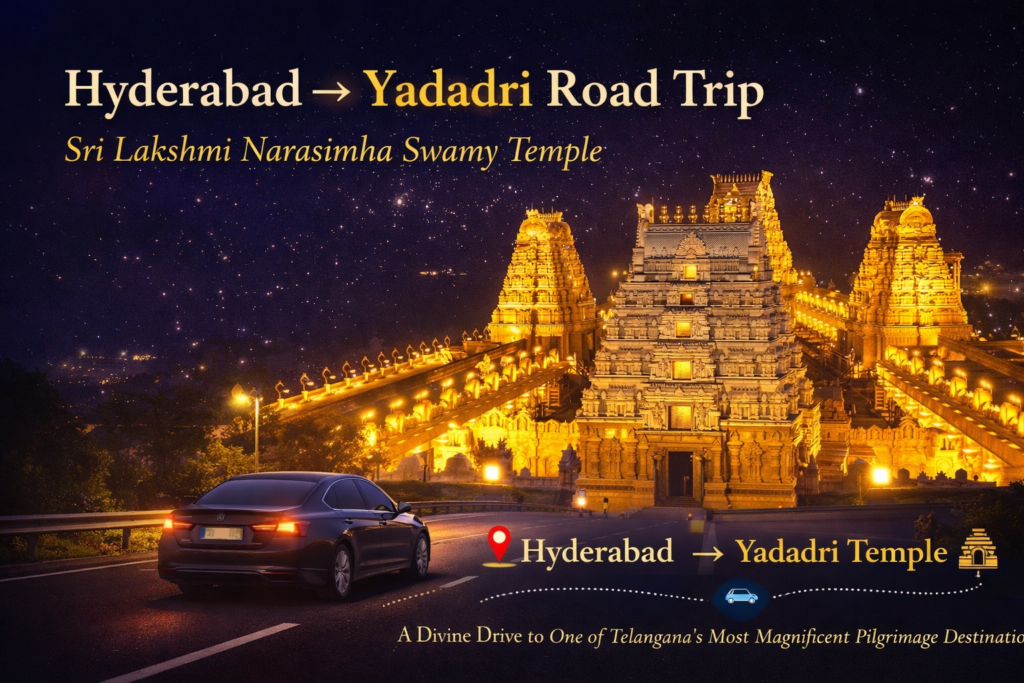
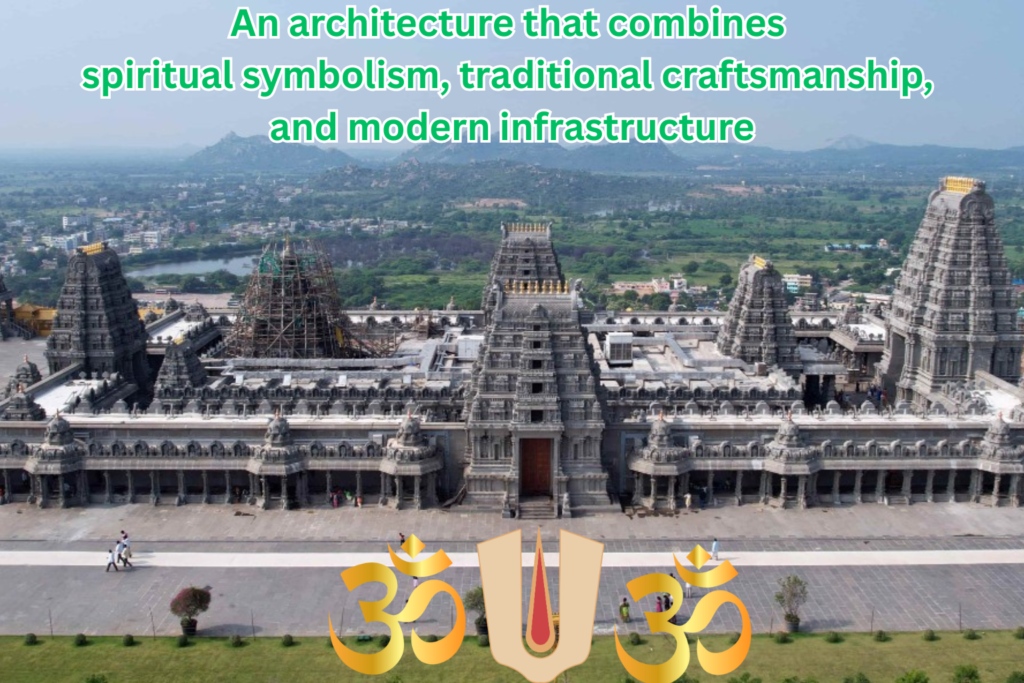
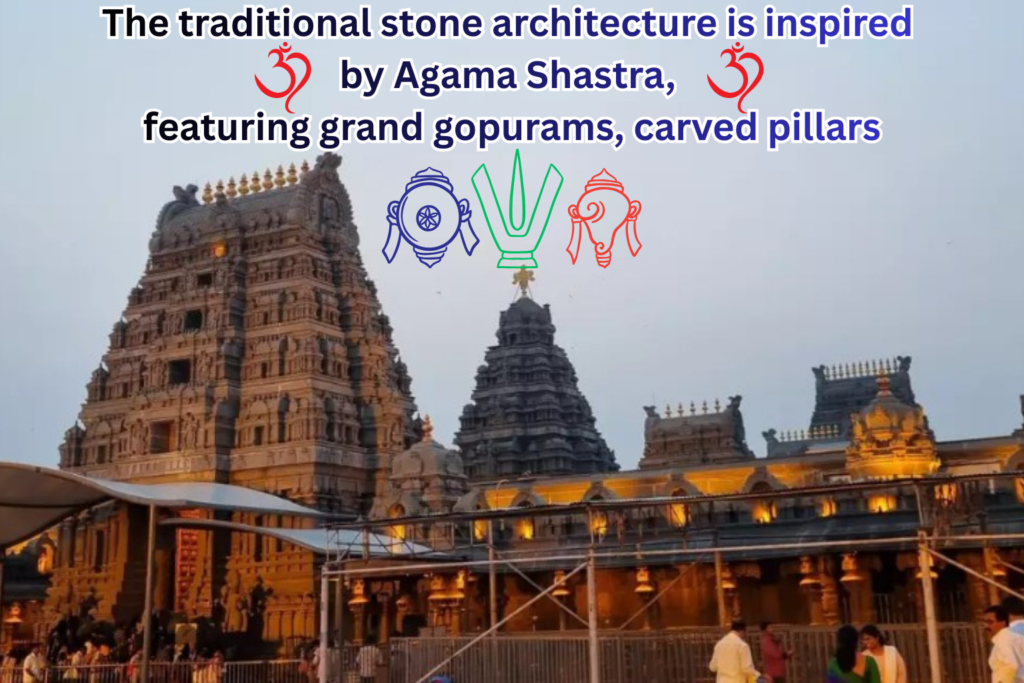
Explore Yadagirigutta Temple (Yadadri), a sacred hill shrine of Lord Lakshmi Narasimha near Hyderabad. Learn about its history, architecture, darshan details, hotels, government facilities, and travel tips for a peaceful pilgrimage.
Yadagirigutta Temple, officially known today as Sri Lakshmi Narasimha Swamy Temple, Yadadri, is one of Telangana’s most sacred and architecturally magnificent pilgrimage destinations. Located on a hillock in Yadadri Bhuvanagiri district, about 60 km from Hyderabad, this temple is dedicated to Lord Narasimha, an incarnation of Lord Vishnu. Blending ancient mythology with modern temple grandeur, Yadadri has transformed into a world-class spiritual complex that attracts lakhs of devotees every year.
History and Spiritual Significance
The origins of Yadagirigutta date back centuries and are rooted in Hindu mythology. According to legend, Sage Yadarishi, a great devotee of Lord Vishnu, performed intense penance in a cave on this hill. Pleased with his devotion, Lord Narasimha manifested in five different forms — Jwala Narasimha, Yogananda Narasimha, Lakshmi Narasimha, Ugra Narasimha, and Gandabherunda Narasimha. The temple is believed to be built around this sacred cave, which remains the spiritual heart of the shrine.
For generations, Yadagirigutta was a regional pilgrimage site. In recent years, the Telangana Government undertook a massive redevelopment project, transforming the temple into “Yadadri”, a grand spiritual and architectural marvel inspired by traditional temple construction styles. Today, it stands as one of the most important Narasimha temples in South India.
Temple Architecture and Features
The renovated Yadadri Temple is a stunning example of Agama Shastra–based temple architecture, primarily built using granite stone rather than concrete. This ensures both spiritual authenticity and structural longevity.
Architectural Highlights
Grand Rajagopuram (Temple Tower): The towering entrance gopuram is adorned with intricate carvings of deities, mythological scenes, and celestial motifs.
Mandapas (Halls): Beautifully sculpted pillars and mandapas showcase traditional Vaishnavite craftsmanship.
Sanctum Cave Shrine: The original cave shrine remains preserved inside the temple complex, where devotees can still experience the ancient spiritual atmosphere.
Golden Vimana: The sanctum tower above the deity is plated with gold, symbolizing divine radiance.
Temple Complex Layout: The temple is spread across a large hilltop area with broad pathways, queue complexes, and landscaped surroundings.
The architecture combines spiritual symbolism, traditional craftsmanship, and modern infrastructure, making Yadadri not only a pilgrimage site but also an architectural landmark.
Hotels Near Yadagirigutta Temple
As Yadadri has grown into a major pilgrimage destination, accommodation facilities have expanded significantly. Visitors can choose between government-run guest houses and private hotels.
🏛 Government Accommodation
The Telangana Government and temple authorities provide affordable and convenient lodging options for devotees:
Yadadri Temple Guest Houses: Managed by the Devasthanam, these rooms are clean, budget-friendly, and located close to the temple.
TTD-style Choultries: Basic dormitory and room facilities for pilgrims, especially during festival seasons.
Online Booking Facility: Rooms can often be booked through the official temple or tourism portals.
Government accommodations are ideal for pilgrims seeking economical stays close to the temple.
🏨 Private Accommodation
Private hotels and lodges offer more comfort and amenities:
Budget hotels near the temple entrance
Mid-range hotels with air-conditioned rooms
Family lodges with parking and dining facilities
For those wanting more luxurious stays, Hyderabad city (just about 1–1.5 hours away) offers premium hotels and resorts.
Government Arrangements at Yadagirigutta Temple
The Telangana Government has developed Yadadri into a model spiritual tourism center, ensuring comfort, safety, and accessibility.
Key Facilities Include:
Well-planned Queue Complexes for smooth darshan
Free and Paid Darshan Tickets for crowd management
Drinking Water & Resting Areas
Laddu Prasadam Counters
Annadanam (Free Meal) Halls
Parking Facilities for cars and buses
24/7 Security and Surveillance
Medical Aid Centers
Special arrangements are made during festivals like Brahmotsavam, Vaikunta Ekadashi, and Narasimha Jayanti, when pilgrim numbers are extremely high.
Yadagirigutta is easily accessible due to excellent road and rail connectivity.
🚗 By Road
The temple is about 60 km from Hyderabad, making it a comfortable 1.5-hour drive via the Warangal Highway (NH163). Many devotees prefer traveling by car or hired vehicle for flexibility.
🚆 By Train
Yadadri has a nearby railway station called Raigir, which connects to Hyderabad and Warangal.
🚌 By Bus
TSRTC operates frequent buses from Hyderabad’s Jubilee Bus Station (JBS) and MGBS directly to Yadagirigutta.
Do’s and Don’ts at Yadagirigutta Temple
To maintain the sanctity of the temple, devotees are expected to follow certain guidelines.
✅ Do’s
Dress modestly and traditionally
Follow queue discipline during darshan
Maintain silence and decorum inside the temple
Deposit footwear in designated areas
Follow instructions from temple staff
❌ Don’ts
Do not carry mobile phones or cameras into restricted areas
Avoid bringing plastic items
Do not litter on temple premises
Refrain from loud conversations or disruptive behavior
Do not attempt to bypass queue systems
These rules ensure a peaceful and spiritually enriching experience for all devotees.
🛏️ Traveler Tips for Choosing Hotels Near Yadagirigutta
Closer is better for darshan convenience: Properties like Hotel Sannidhi Emerald and Mani Residency are within short walking distance from the temple.
Private stays for longer visits: Farmstay and resort options like RoHans Farmstay and Country Hills Resort offer more space and comfort for families or groups.
Budget friendly options: Guesthouses such as Haritha Hotel, Yadadri Goud Bhavan, and SPOT ON properties are ideal for pilgrims on a budget.
Book early during festivals: Yadagirigutta sees high footfall during major religious days, so it’s recommended to secure accommodation in advance.
🛣️ Best Way to Reach Yadagirigutta Temple from Hyderabad
Yadagirigutta (Yadadri Sri Lakshmi Narasimha Swamy Temple) is one of the most popular spiritual destinations near Hyderabad. Since it’s close and well-connected by road, a road trip is the most convenient and comfortable way to reach the temple especially for families, senior citizens, and group pilgrims.
🚗 Why Road Travel is the Best Choice
A road trip gives you:
Flexible darshan timings (arrive early morning or evening)
Freedom to take breaks for elders/children
Ability to travel together as a family/group
No dependence on fixed bus schedules or crowded public transport
That’s why many devotees prefer booking a private vehicle, and YoDrives becomes a practical option because it covers everything from small cars to large group vehicles.
🚘 Travel to Yadagirigutta with YoDrives (Self-Drive + Driver + Group Vehicles)
YoDrives offers travel solutions for every type of devotee trip:
✅ Vehicle Options Available
Self-Drive Cars (5-seater) – Privacy + full control over your schedule
Chauffeur Driven Cars – Best for seniors and stress-free travel
SUVs & Premium Cars – More comfort for families and longer stays
Tempo Travellers (10–26 seater) – Perfect for group pilgrimages
Mini Bus / Bus (up to 50 seater) – For large families, associations, and tour groups
So whether you’re going as a couple or with 40+ devotees, YoDrives can arrange the right vehicle.
⭐ Why YoDrives is Best Suggested for Hyderabad → Yadagirigutta Travel
Doorstep pickup & drop in Hyderabad
Self-drive and driver options based on your preference
Vehicles for every group size (5 to 50 seaters)
Comfort-first travel for elders (SUV/Tempo recommended)
Flexible trip plan (same-day return or overnight)
Avoids crowd dependency of public travel, especially on festivals/weekends
In short: you decide the timing, stops, and pace YoDrives makes the journey easy.
🗺️ Suggested Travel Plan (Hyderabad → Yadagirigutta)
🌅 Option A: Same-Day Darshan Trip (Recommended)
Early Morning
Start from Hyderabad: 5:00–6:00 AM
Reach Yadagirigutta: 7:00–8:00 AM
Complete darshan comfortably before peak crowd
Midday
Breakfast/lunch near temple area
Visit nearby spiritual spots if time permits
Afternoon
Start return: 3:30–4:30 PM
Reach Hyderabad by evening
✅ Best for families who want a smooth trip without staying overnight.
🌙 Option B: Overnight / Weekend Plan (Relaxed)
Day 1
Start late morning / afternoon
Darshan + explore temple complex
Stay nearby (government/private hotels)
Day 2
Early morning darshan (less crowd)
Return to Hyderabad after breakfast
✅ Ideal if you want a calmer, unhurried spiritual experience.
📌 Quick Tip
Weekends and special days at Yadagirigutta get crowded. Booking your car/tempo/bus in advance is strongly recommended especially if traveling as a group.
Customer Testimonials
❓ Frequently Asked Questions About Yadagirigutta Temple
1️⃣ Where is Yadagirigutta Temple located?
Yadagirigutta Temple, also known as Yadadri Sri Lakshmi Narasimha Swamy Temple, is located in Yadadri Bhuvanagiri district, Telangana, about 60 km from Hyderabad.
2️⃣ Why is Yadagirigutta Temple famous?
The temple is dedicated to Lord Lakshmi Narasimha, an incarnation of Lord Vishnu. It is one of the most important Narasimha temples in South India and is known for its cave shrine and divine healing beliefs.
3️⃣ What is special about the Yadadri Temple architecture?
The newly renovated Yadadri Temple is built in traditional stone architecture inspired by Agama Shastra, featuring grand gopurams, carved pillars, mandapas, and a gold-plated vimana above the sanctum.
4️⃣ How far is Yadagirigutta from Hyderabad?
Yadagirigutta is approximately 60 kilometers from Hyderabad, and the journey by road usually takes 1.5 to 2 hours.
5️⃣ What are the temple timings at Yadagirigutta?
The temple generally opens early in the morning and closes at night. Timings may change during festivals and special occasions, so it is advisable to check locally before visiting.
6️⃣ What are the main festivals celebrated at Yadagirigutta Temple?
Major festivals include Brahmotsavam, Narasimha Jayanti, Vaikunta Ekadashi, and other Vaishnavite celebrations, which attract thousands of devotees.
7️⃣ Are accommodation facilities available near Yadagirigutta Temple?
Yes, both government guest houses and private hotels are available near the temple. Telangana Tourism and temple authorities manage several budget-friendly options.
8️⃣ Is there parking available at Yadadri Temple?
Yes, the temple complex has designated parking areas for cars, buses, and other vehicles.
9️⃣ Is there a dress code for visiting Yadagirigutta Temple?
Devotees are encouraged to wear traditional and modest attire while visiting the temple to maintain its spiritual decorum.
🔟 How can I reach Yadagirigutta Temple from Hyderabad?
Yadagirigutta can be reached by road, train, or bus. Many devotees prefer a road trip for convenience, especially when traveling with family or elders.
1️⃣1️⃣ What is the spiritual significance of the cave shrine at Yadadri?
The temple is believed to be built around a sacred cave where Lord Narasimha manifested to Sage Yadarishi. The cave sanctum adds to the temple’s deep mythological and spiritual importance.
Conclusion
Yadagirigutta (Yadadri) Temple stands today as a perfect blend of ancient devotion and modern temple planning. Its deep mythological roots, breathtaking architecture, and well-organized facilities make it one of Telangana’s most important spiritual destinations. Whether you are a devotee seeking blessings of Lord Narasimha or a traveler interested in temple architecture, Yadadri offers a truly divine and memorable experience — all just a short journey from Hyderabad.
Plan February 2026 holidays in Telangana with festival dates, temple trips, weather insights, and the best travel ideas for families and groups.
Major festivals like Guru Ravidas Jayanti and Maha Shivaratri make February ideal for travelers who enjoy calm journeys and devotional experiences. Whether you are traveling with family, friends, or office colleagues, YoDrives self-drive cars and rentals make travel smooth, flexible, and stress-free.
📅 February 2026 Holidays in Telangana – At a Glance
Travel Tip: February 2026 has limited official holidays, but the weather is perfect for temple tours and road trips.
🌟 Major February 2026 Festivals in Telangana
1. Guru Ravidas Jayanti (February 1 – Sunday)
Guru Ravidas Jayanti marks the birth anniversary of Sant Guru Ravidas, a respected saint and social reformer who preached equality and devotion. Devotees observe this day through prayers, bhajans, and community gatherings.
How to Observe:
Visit local temples and prayer halls
Attend devotional programs
Participate in community service
Why It Matters: The festival teaches values of equality, respect, and social harmony, making it meaningful for families and children.
YoDrives Tip: Since the holiday falls on a Sunday, book a self-drive car or car with driver for peaceful temple visits.
2. Maha Shivaratri (February 15 – Sunday)
Maha Shivaratri is the most important festival in February 2026. Dedicated to Lord Shiva, devotees observe fasting, night-long prayers, and special temple darshan.
Best Temples to Visit:
Srisailam Mallikarjuna Temple
Vemulawada Rajarajeshwara Temple
Keesaragutta Temple, Hyderabad
Food to Try: Satvik meals, temple prasadam, and simple vegetarian dishes.
YoDrives Tip: February nights are cool and comfortable. Book an SUV or tempo traveller with YoDrives for overnight temple journeys.
🌴 Leave Planning & Short Breaks – February 2026
Although February has fewer public holidays, it is perfect for short spiritual and leisure trips.
Maha Shivaratri weekend is ideal for overnight travel
Weekends work well for one-day or two-day trips
Low tourist rush means peaceful darshan and travel
February suits travelers who prefer quality time over crowded peak seasons.
🏞️ Best Places to Visit During February 2026 Holidays in Telangana
February is an excellent month to explore Telangana, as the weather is pleasant, travel conditions are smooth, and tourist crowds are relatively low. The February 2026 holidays in Telangana are ideal for temple visits, heritage exploration, nature drives, and short family-friendly trips. Below are some of the best destinations to consider during this season.
Srisailam
Srisailam is one of the most popular spiritual destinations in Telangana and Andhra Pradesh. Home to the famous Mallikarjuna Jyotirlinga, this sacred town is surrounded by the lush Nallamala forests, making the journey as beautiful as the destination itself. February offers cool weather, which is perfect for temple darshan, sightseeing, and forest drives. Families and devotees often combine spiritual visits with nature exploration, boating, and viewpoints around the Srisailam Dam.
Warangal
Warangal is a must-visit destination for history and architecture lovers. The city is known for the Ramappa Temple, a UNESCO World Heritage Site, and other iconic landmarks like the Thousand Pillar Temple and Warangal Fort. February is ideal for exploring these heritage attractions without the discomfort of summer heat. Warangal is suitable for family trips, educational tours, and weekend getaways from Hyderabad.
Yadagirigutta
Yadagirigutta is one of the most popular one-day temple trips from Hyderabad. Dedicated to Lord Lakshmi Narasimha Swamy, the temple attracts thousands of devotees daily. February’s pleasant climate makes darshan and hilltop visits comfortable, especially for elders and children. Many families prefer Yadagirigutta during February holidays for its short travel distance, peaceful atmosphere, and well-developed facilities.
Nagarjuna Sagar
Nagarjuna Sagar is a perfect blend of history, engineering, and natural beauty. The massive dam, scenic reservoir views, and nearby museum make it an excellent destination for relaxed sightseeing. February is a great time to visit as the surroundings remain green and the weather is comfortable for walking and photography. This destination suits families, friends, and office groups looking for a calm and refreshing trip.
Bhongir Fort
Bhongir Fort is ideal for travelers seeking light adventure mixed with history. Located close to Hyderabad, the fort is known for its unique egg-shaped hill and easy trekking route. February weather is perfect for climbing the fort without exhaustion, making it suitable for beginners, families with teenagers, and friend groups. The panoramic views from the top and the historical significance make Bhongir Fort a rewarding half-day trip.
For official information on destinations, festivals, and travel updates, visit the Telangana Tourism website Visit: https://tourism.telangana.gov.in/
✅ Why February 2026 Is Ideal for These Trips
Pleasant weather for long drives and outdoor activities
Less tourist rush compared to peak summer and festival seasons
Comfortable for elders, kids, and group travelers
Perfect month for temple tours and heritage sightseeing
Whether you are planning a spiritual journey, a heritage exploration, or a short weekend getaway, these destinations make the February 2026 holidays in Telangana truly enjoyable. With YoDrives self-drive cars and rental services, you can travel at your own pace and make the most of every destination.
🚆 Public Transport Options
Buses: Luxury and sleeper buses available via eTravelSmart
Trains: Hyderabad has good rail connectivity to major Telangana towns
Flights: Rajiv Gandhi International Airport connects major cities
Best Option: During the February 2026 holidays in Telangana, self-drive cars from YoDrives offer maximum flexibility and comfort.
🚘 How YoDrives Makes February 2026 Travel Easy
YoDrives supports all February travel plans with:
Self-Drive Cars – Daily and weekend rentals
Car + Driver Packages – Ideal for elders and temple tours
Tempo Travellers & Buses – Family and office group trips
Airport Transfers – Smooth festive travel
Customized Packages – Temples, weekends, and events
Q1. What are the major February 2026 holidays in Telangana? A: Guru Ravidas Jayanti (Feb 1) and Maha Shivaratri (Feb 15).
Q2. Is February 2026 good for temple trips? A: Yes, the weather is pleasant and crowds are low.
Q3. Are long weekends available in February 2026? A: Maha Shivaratri falls on a Sunday, perfect for overnight trips.
Q4. Does YoDrives provide temple travel packages? A: Yes, YoDrives offers both self-drive and driver-assisted packages.
Q5. Is February suitable for family trips and senior citizens? A: Yes. February’s mild climate (not too hot or cold) is ideal for families, children, and senior citizens, especially for spiritual and heritage trips.
Q6. Can office groups or corporate teams plan trips in February 2026? A: Absolutely. February is great for office outings and team trips as hotels, transport, and tourist spots are less crowded, making planning easier and more budget-friendly.
Q7. What is the best mode of travel during February 2026 holidays in Telangana? A: While buses and trains are available, self-drive cars or rental cars offer the most flexibility, especially for temple circuits and multiple destinations in one trip.
Q8. Does YoDrives provide festival and temple trip packages in February 2026? A: Yes. YoDrives offers self-drive cars, car with driver, tempo travellers, and customized temple tour packages for families, friends, and office groups during February holidays.
Q9. Are hotel prices high during February in Telangana? A: No. February is considered an off-peak travel season, so hotel prices are generally reasonable compared to summer vacations and major festival months.
Q10. How many days are ideal for a February 2026 Telangana trip? A: A 1–2 day trip is perfect for nearby temple towns, while 3–4 days are ideal for combining temples, heritage sites, and nature destinations.
🏁 Conclusion
The February 2026 holidays in Telangana are perfect for peaceful temple visits, short road trips, and family bonding. With Maha Shivaratri and pleasant weather, February is an excellent month for relaxed travel. Plan early, travel comfortably, and choose YoDrives for a safe and flexible holiday experience.
Book Hyderabad to Arunachalam Package with YoDrives for a peaceful 3-day spiritual road trip, Girivalam, temple darshan, and flexible self-drive travel.
Arunachalam, also known as Tiruvannamalai, is one of the most powerful spiritual destinations in India. Home to the sacred Arunachaleswarar Temple and the holy Arunachala Hill, it attracts devotees from across the country who seek peace, transformation, and divine energy.
For travelers from Telangana, a Hyderabad to Arunachalam package by road is one of the most fulfilling ways to experience this sacred journey.
Why Choose a Road Trip from Hyderabad to Arunachalam?
The distance from Hyderabad to Arunachalam is approximately 630–650 km, making it ideal for a 2–3-day road journey. Unlike flights or trains, a road trip offers flexibility—especially important for spiritual travellers who may want to stop at temples, take rest breaks, or travel with family elders.
Benefits of a Road Trip:
Complete control over your travel schedule
Comfortable journey for families and senior citizens
Freedom to halt for darshan timings and Girivalam
Ideal for spiritual and leisure combination trips
About Arunachalam (Tiruvannamalai)
Arunachalam is one of the Pancha Bhoota Sthalams, representing the element of Fire (Agni). It is believed that Lord Shiva manifested as a column of fire here, making this place extremely sacred.
Key spiritual highlights include:
Arunachaleswarar Temple – One of the largest Shiva temples in India
Girivalam (Giri Pradakshina) – 14 km barefoot circumambulation around the hill
Karthigai Deepam Festival – A grand spiritual event attracting lakhs of devotees
Ramana Ashram – A center of meditation and spiritual learning
Arunachalam Temple – A Divine Journey to the Fire of Enlightenment
Arunachalam Temple, also known as Arunachaleswarar Temple, is one of South India’s most sacred and spiritually powerful destinations. Located in Tiruvannamalai, Tamil Nadu, this ancient temple is dedicated to Lord Shiva in the form of Agni (Fire), representing transformation, purity, and inner awakening. It is one of the revered Pancha Bhoota Sthalams, symbolizing the five elements of nature.
The temple stands at the base of the sacred Arunachala Hill, which is believed to be Shiva himself in the form of a mountain. Devotees and tourists from across India and the world visit this holy site to experience its intense spiritual energy and architectural grandeur. The massive temple complex, with its towering gopurams (gateway towers), ancient stone corridors, and intricately carved pillars, reflects the brilliance of Dravidian architecture.
One of the most unique spiritual experiences here is Girivalam (Giri Pradakshina)—a 14-kilometer walk around Arunachala Hill. Pilgrims believe that completing this sacred walk brings peace of mind, removes negativity, and fulfils spiritual desires. The path is lined with temples, ashrams, and peaceful spots, making it a deeply meditative journey even for non-religious travellers.
A major attraction for tourists is the Karthigai Deepam festival, celebrated between November and December. During this festival, a giant flame is lit atop Arunachala Hill, visible from miles away, symbolizing the eternal light of Shiva. The festival draws lakhs of devotees and offers an unforgettable cultural and spiritual spectacle.
Beyond spirituality, Tiruvannamalai offers a calm and reflective atmosphere. Visitors can explore nearby Ramana Ashram, enjoy local South Indian cuisine, and experience the simplicity of temple-town life. Whether you seek devotion, inner peace, history, or cultural richness, Arunachalam Temple is a destination that leaves a lasting impression—making it a must-visit tourist spot in South India. 🙏✨
With car rentals, you can travel at your own pace, follow your spiritual rhythm, and enjoy a smooth, comfortable pilgrimage with a range of flexible self-drive pilgrimage package that allows you to plan your Hyderabad to Arunachalam journey comfortably without the restrictions of fixed tour operators.
What the Package Includes:
🚗 Self-drive car rental from Hyderabad
⏱️ Flexible rental duration (2 days, 3 days, or more)
🧳 Suitable for families, groups, or solo devotees
🛣️ Ideal for long-distance highway travel
Vehicle Options for the Journey
Based on comfort, group size, and luggage, there are multiple vehicle options:
Recommended Cars:
Hatchbacks – Budget-friendly for 2–3 travelers
Sedans – Comfortable for couples and small families
SUVs – Ideal for families, elders, and long drives
Premium SUVs – Extra comfort for extended temple visits
Suggested Travel Itinerary (3 Days)
Day 1: Hyderabad → Tiruvannamalai
Early morning start from Hyderabad
Drive via Kurnool – Chittoor – Vellore route
Breaks for food and rest en route
Check-in near Arunachalam temple
Day 2: Arunachalam Darshan & Girivalam
Early morning temple darshan
Perform Girivalam (14 km circumambulation)
Visit Ramana Ashram
Evening meditation or rest
Day 3: Return Journey
Morning darshan (optional)
Return to Hyderabad at a relaxed pace
Why Choose YoDrives for Your Arunachalam Trip?
1. Self-Drive Freedom
No drivers, no schedules, no pressure. Travel according to your spiritual comfort.
2. Cost-Effective
Self-drive packages are often more economical than chauffeur-driven pilgrimage tours, especially for families.
3. Privacy & Peace
Ideal for devotees who prefer silence, chanting, or meditation during the journey.
4. Flexible Timings
Darshan times, Girivalam hours, and rest breaks are entirely up to you.
Best Time to Travel from Hyderabad to Arunachalam
October to March – Pleasant weather, ideal for Girivalam
Karthigai Deepam (Nov–Dec) – Highly auspicious but crowded
Full Moon Days (Pournami) – Special spiritual significance
Booking your self-drive car early during festivals and long weekends is strongly recommended.
Estimated Package Cost (Indicative)
The cost of a Hyderabad to Arunachalam self-drive package depends on:
(Fuel, tolls, and parking charges are typically extra.)
Who Should Choose This Package?
Families planning a spiritual road trip
Devotees visiting Arunachalam for Girivalam
Couples seeking a peaceful pilgrimage
Groups wanting cost-effective travel
Travelers who prefer flexible schedules
Customer Testimonials
❓ Frequently Asked Questions – Hyderabad to Arunachalam Package
1. What is the distance from Hyderabad to Arunachalam by road?
The road distance from Hyderabad to Arunachalam (Tiruvannamalai) is approximately 630–650 km, depending on the route taken.
2. How many days are ideal for a Hyderabad to Arunachalam road trip?
A 2 to 3-day trip is ideal. This allows comfortable travel, temple darshan, Girivalam, and adequate rest without rushing.
3. What type of car is best for this journey?
Sedans and SUVs are recommended for long-distance comfort. Families and senior citizens usually prefer SUVs for better space and ride comfort.
4. Does YoDrives offer self-drive cars for pilgrimage trips?
Yes. YoDrives provides self-drive car rentals that are ideal for pilgrimage trips, offering flexibility, privacy, and complete control over travel schedules.
5. Are fuel, tolls, and parking included in the package?
No. Fuel, toll charges, and parking fees are not included and are to be borne by the customer during the journey.
6. Can we stop for Girivalam and temple visits during the trip?
Yes. One of the biggest advantages of a self-drive package is the freedom to stop for Girivalam, darshan timings, and temple visits at your convenience.
7. When is the best time to travel from Hyderabad to Arunachalam?
The best time to travel is between October and March, when the weather is pleasant and ideal for temple visits and Girivalam.
8. How can I book the Hyderabad to Arunachalam self-drive package?
9.Book Your Hyderabad to Arunachalam Package with YoDrives
A pilgrimage is not just about reaching a destination it’s about the journey, devotion, and inner peace. With YoDrives, your Hyderabad to Arunachalam trip becomes smooth, flexible, and spiritually enriching.
Conclusion
The Hyderabad to Arunachalam road trip is a peaceful and spiritual journey. With YoDrives, you can travel comfortably at your own pace, stop for darshan or Girivalam anytime, and enjoy complete freedom without stress. Whether you go with family or alone, a self-drive car makes the trip easy, flexible, and meaningful.
YoDrives helps you focus on devotion, comfort, and peace—making your spiritual journey truly special. 🙏🚗 👉 Book your self-drive car today: https://www.yodrives.com/
Plan your sacred journey your way. YoDrives – Your Own Drivez.